Postpartum Recovery the Second Time: Why It Is Different With a Toddler in the House

Quick Answer: Second-time postpartum recovery differs in three concrete ways: your abdominal wall and pelvic floor start from a different baseline, the daily physical demands are much higher because you are lifting a toddler from day one, and the uninterrupted rest that first-time plans assume simply does not exist. The practical adjustments are to treat toddler-lifting as your load management problem rather than something separate from training, to prioritize breathing and pelvic floor work that can happen in 90-second fragments, and to accept a longer, less linear timeline without reading it as regression.
The first time, the advice fit. Rest when the baby rests. Start gentle walking. Take six weeks. The second time you have a newborn, a toddler who wants to be picked up, a car seat to carry, and roughly none of the conditions those recommendations were written for.

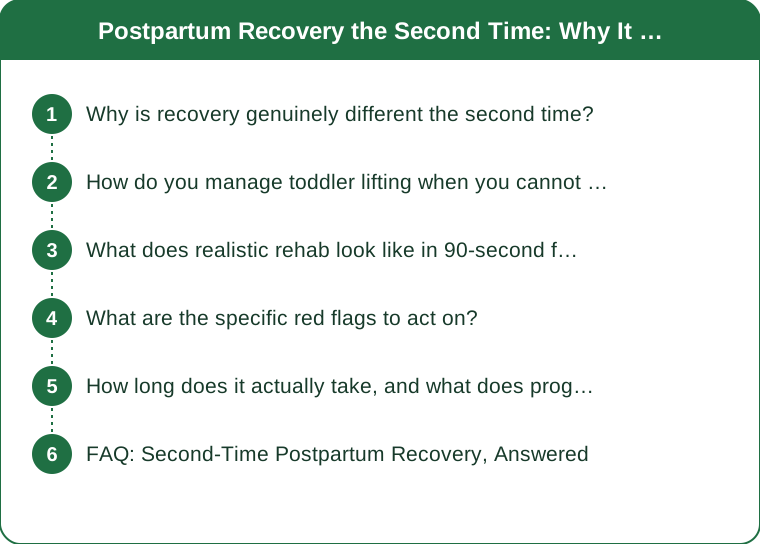
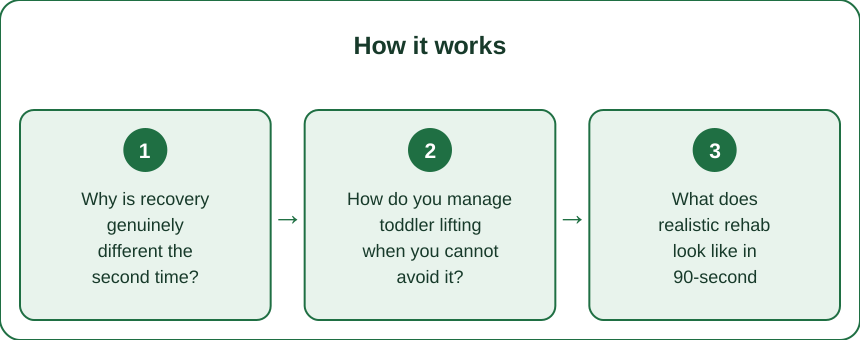
Why is recovery genuinely different the second time?
Your starting tissue is different, and that is not a judgment. Abdominal connective tissue that has already stretched significantly tends to separate earlier and sometimes further in a subsequent pregnancy, and the linea alba may not have fully restored tension before the next pregnancy began. Many women notice their bump appeared earlier the second time for exactly this reason.
Pelvic floor history carries forward. If you had any degree of pelvic floor dysfunction after a first birth - leaking with coughing or running, heaviness, urgency - that history matters. Subsequent births are associated with higher rates of persistent symptoms, particularly when the first recovery did not include dedicated rehabilitation. This is a strong argument for seeing a pelvic health physiotherapist proactively rather than waiting to see whether symptoms appear.
The load starts immediately and is not optional. A first-time mother lifts a newborn. A second-time mother lifts a newborn and a toddler who weighs 25 to 35 pounds, often awkwardly, often unexpectedly, often from the floor while holding something else. That is meaningful resistance training happening at exactly the moment the guidance says to avoid heavy lifting - and it cannot be scheduled away.
Rest fragments differently. The classic advice to sleep when the baby sleeps assumes there is no second child awake and requesting snacks. Sleep deprivation the second time tends to be more continuous and less recoverable, which affects tissue healing, pain sensitivity, and the amount of executive function available for any rehab program with more than three steps.
And your expectations are a factor. Having recovered once, many women expect either a faster recovery because they know what they are doing, or a harder one because everyone warned them. Both expectations create their own frustration. The honest answer is that it is usually different rather than uniformly worse - core and pelvic floor work often take longer, while confidence, feeding, and general adaptation are frequently much easier.
One thing that is genuinely better: you know what normal feels like. Second-time mothers are typically much faster at identifying when something is wrong, which is a real clinical advantage and worth trusting. This is general information, not medical advice - your birth history, delivery type, and any complications should shape your plan with a clinician who knows them.
How do you manage toddler lifting when you cannot avoid it?
You cannot eliminate it, so the goal is to make it as well-executed and as infrequent as reasonably possible.
Change the geometry rather than the frequency. Teaching a toddler to climb - onto the sofa, into the car seat, up to the changing table with a step stool - converts a full lift into an assist. This is the highest-yield change available and it usually takes about a week of consistency to establish. Most toddlers enjoy it; the resistance is usually parental guilt rather than the child.
Exhale on the effort, every time. Breath holding during a lift dramatically increases intra-abdominal pressure, which is the mechanism most relevant to both abdominal separation and pelvic floor loading. Exhaling as you lift is a small habit with a large mechanical effect, and it is the single most transferable thing you will learn in pelvic health physiotherapy.
Get the load close before you lift. The further a weight is from your body, the greater the demand on the abdominal wall and back. Bring the toddler in against your chest before standing, rather than lifting at arm’s length and then adjusting.
Use a wide, low base. Split stance or a squat with the feet apart rather than a rounded-back bend. This is the same coaching anyone would receive in a gym; the only difference is that the load wriggles.
Sit down for cuddles instead of standing and holding. A sustained standing hold with a toddler on one hip is a prolonged asymmetric load on a system that is already recovering, and it is a common source of low back and pelvic pain in second-time mothers. Sitting on the floor removes it entirely.
And treat a heavy lifting day as a training day. If you carried the toddler through a shopping trip, that was your load for the day. Adding a demanding core session on top is how people end up feeling worse and concluding rehab does not work. Your body does not distinguish between deliberate loading and life loading - and neither should your planning.
What does realistic rehab look like in 90-second fragments?
Frequency beats duration in this phase, and that is genuinely how the tissue responds. Pelvic floor and deep abdominal retraining responds well to frequent short practice, which is fortunate, because a 40-minute session is not happening for a while.
Start with breathing, because everything else depends on it. Lying on your side or sitting supported, breathe so the ribs expand laterally rather than the chest rising. On the exhale, feel the natural lift of the pelvic floor rather than forcing it. Two minutes, several times a day, is a real intervention rather than a warm-up - and it can happen while feeding.
Add connection work before strength work. Gentle pelvic floor contractions coordinated with the exhale, then a light drawing-in of the lower abdomen. The goal is control and full relaxation between repetitions, not maximum squeeze. Chronically over-gripping a pelvic floor is a real problem with its own symptom pattern, and it is common in motivated people who assume more is better.
Then progress to loaded positions you actually use. A supported squat, a split-stance lift, standing with a light hold - practiced deliberately with exhale-on-effort. This is more useful than floor exercises alone precisely because your life is full of loaded standing tasks.
Attach each fragment to an existing cue. During the first feed of the day, while the kettle boils, during a specific show the toddler watches. Fragmented rehab fails on remembering, not on difficulty.
Walk, but count the pram and the toddler. A 30-minute walk pushing a pram with a toddler on a buggy board is not a gentle walk. It is a good thing to be doing and it is more load than the guidance means when it says start with gentle walking, so build the duration more gradually than a first-time plan would suggest.
Expect the schedule to break weekly. A plan that assumes five sessions and delivers two is not a failed plan if the two happen most weeks. Consistency across months is what changes tissue; perfection across a week is not available and is not required.

What are the specific red flags to act on?
Heaviness, dragging, or a bulging sensation in the vagina, particularly worsening through the day. These are the classic symptoms associated with pelvic organ prolapse, and they warrant a pelvic health assessment rather than a wait-and-see approach. They are common, they are treatable, and they respond better to earlier intervention.
Leaking urine with coughing, sneezing, laughing, lifting, or running. Extremely common, particularly after a second birth, and not something to accept as a permanent consequence of having children. Conservative pelvic floor muscle training with a specialist has good evidence behind it.
A visible doming or coning along the midline during effort. If your abdomen forms a ridge when you sit up from lying, lift the toddler, or do any core exercise, that is a signal to change how you are performing the movement and to have your abdominal separation assessed, rather than to push through.
Pain at the pubic bone, tailbone, or sacroiliac joints that limits walking or stairs. Pelvic girdle pain frequently recurs and is often more pronounced in subsequent pregnancies and postpartum periods. It responds to specific management and does not reliably resolve on its own.
Bleeding that increases after activity, or returns after stopping. This is a signal to reduce activity and contact your provider.
Persistent, worsening low mood, anxiety, intrusive thoughts, or difficulty functioning. Perinatal mood and anxiety disorders are common and treatable, and risk is meaningful in subsequent births as well. Second-time parents frequently normalize distress because they are busy and because they got through it before. Tell someone.
None of this is a reason for fear, and all of it is a reason for a proactive appointment. In many countries a pelvic health physiotherapy referral is standard after birth; where it is not, it is usually worth seeking out privately if you can, particularly with a second baby and a lifting-heavy daily life. This is general information, not medical advice.
How long does it actually take, and what does progress look like?
Longer than six weeks, and that is the normal answer, not the disappointing one. The six-week check is a clearance point for resuming some activity, not a marker of tissue healing being complete. Connective tissue remodeling continues for months, and research on postpartum recovery consistently describes timelines measured in many months rather than weeks.
Expect a less linear curve than the first time. Sleep disruption from two children means good weeks and bad weeks alternate more visibly. A week where everything feels harder after a toddler illness is a recovery-debt week, not a regression in your rehab.
Early progress markers are unglamorous and reliable. Less doming during lifting. Fewer leaks. Being able to walk further without pelvic heaviness by evening. Getting off the floor more easily while holding the baby. These matter far more than any aesthetic marker and they respond to consistent work.
The abdominal gap may never close completely, and that is not the target. Current understanding emphasizes the ability to generate tension across the midline and manage load, rather than the width of the gap itself. Plenty of women function excellently with a residual measurable separation, and plenty of narrow gaps are poorly controlled.
Returning to running deserves a specific gate, not a date. Common guidance in pelvic health practice is to look for a symptom-free base of walking and single-leg load tolerance before running, typically not before around three months and often later - and to treat leaking, heaviness, or pain during a return attempt as a signal to step back and get assessed rather than to push on.
Give yourself the second-time advantage. You already know that the newborn phase ends, that feeding gets easier, and that a bad night is not a trend. Applying that same perspective to your body - which is doing a harder job under worse conditions than it did the first time - is probably the most useful thing in this article.
And ask for the lifting help specifically. When people offer to help, most parents ask for meals. Asking someone to do the nursery pickup, the car seat, or the bath lift for two weeks targets the exact load that is hardest on a recovering abdominal wall and pelvic floor. It is a better use of an offer than lasagne, and almost nobody thinks to ask for it.
FAQ: Second-Time Postpartum Recovery, Answered
Is postpartum recovery harder with a second baby?
It is usually different rather than uniformly harder. Core and pelvic floor recovery often take longer because tissue starts from a different baseline and daily lifting demands are much higher, while feeding, confidence, and general adaptation are frequently easier the second time.
How should I lift my toddler after giving birth?
Exhale as you lift, bring the child close to your body before standing, use a wide split stance or squat rather than a rounded back, and convert lifts into assisted climbs wherever possible with steps and stools. Sit down for extended holds instead of standing with a child on one hip.
When can I start exercising after a second baby?
Breathing and gentle pelvic floor connection work can usually begin early with your provider’s agreement, while loaded exercise and running follow a symptom-based progression rather than a fixed date. Given the lifting demands of a toddler, a pelvic health physiotherapy assessment is particularly worth arranging.
Is diastasis recti worse the second time?
Separation frequently appears earlier and can be wider in subsequent pregnancies, especially if the abdominal wall had not fully recovered beforehand. The more useful measure is how well you can generate tension across the midline under load - watch for doming during lifting and get assessed rather than measuring the gap alone.
TL;DR:
- Second-time recovery differs in tissue baseline, daily lifting load, and available rest - not because you did anything wrong the first time.
- Treat toddler lifting as your primary load management problem: exhale on effort, load close to the body, wide base, and convert lifts into assisted climbs.
- Do rehab in 90-second fragments attached to existing cues; frequency beats duration in this phase and a 40-minute session is not coming.
- Act on heaviness or bulging, leaking, midline doming, pelvic girdle pain, bleeding that increases with activity, and any persistent mood changes - all are common and all are treatable.
- Expect a non-linear timeline measured in months, judge progress by function rather than gap width, and ask helpers for lifting support rather than meals.
You are recovering under harder conditions than the first time, with less sleep and a 30-pound toddler who does not care about your abdominal wall. Adjusting the plan to that reality is not lowering the bar - it is the only version of the plan that will actually happen. This is general information, not medical advice; speak with your provider or a pelvic health physiotherapist about your specific history.
See It in Motion
Seen here: Maternity Capris with Side Pockets — shop it on bubblelime.com
Keep Reading
This article is for general informational and styling purposes only. Fit, sizing, and product availability may vary.