Postpartum Return to Exercise in Cold Weather: The Complete Guide

Quick Answer: Cold weather changes postpartum return in three concrete ways: pelvic floor muscles hold more resting tension when you are cold, layering complicates feeding and changes what is practical to wear, and outdoor walking — the backbone of most return plans — becomes weather-dependent. The adaptations are a longer warm-up, a genuinely indoor fallback plan, and accepting that the first six weeks of a cold-season return move more slowly than a summer one. This is general information, not medical advice; get clearance from your healthcare provider before starting.
Most postpartum return guides were written with a summer return in mind. Walk every day, they say. Get outside. Start with fifteen minutes.
Then it is 45F and raining at 7am, you have a baby who has been awake since four, and the walk is not happening.
This guide is for that version. What changes in the cold, what does not, and how to build a plan that is still running when the weather is at its worst rather than one that quietly ends in November.

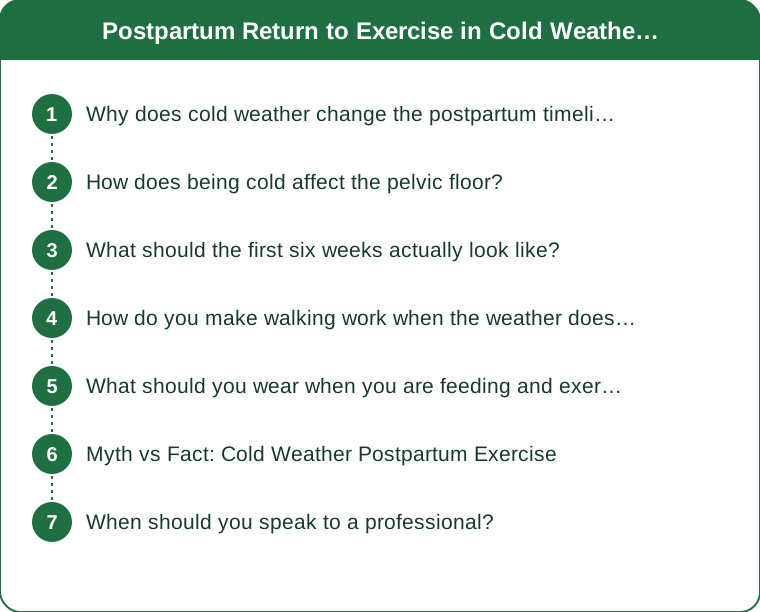
Why does cold weather change the postpartum timeline?
It does not change the tissue healing timeline at all, and that distinction matters before anything else.
The biological schedule is the same in every season. Uterine involution takes around six weeks. Connective tissue affected by relaxin returns toward baseline over roughly three to six months, longer if you are breastfeeding. A caesarean scar is a scar in October exactly as it is in June. Nothing about the cold makes you heal slower.
What changes is everything around the healing. Cold-season returns are slower in practice because the opportunities are fewer and the barriers are higher, and both of those are logistical rather than physiological.
Consider the actual week. A summer return has daylight from 5am to 9pm, which means a walk fits into almost any gap. An autumn return has usable daylight from perhaps 7am to 6pm, and much of that is either wet or occupied. The same fifteen-minute walk that had twelve possible slots now has three.
Then there is the illness factor, which nobody plans for and everybody encounters. Cold and flu season arrives at the same time, and a household with a new baby — especially one with older children in nursery or school — spends a meaningful share of the autumn unwell. A plan that requires unbroken consistency will break, and breaking it will feel like failure rather than like weather.
The correct adaptation is to build a plan with a lower floor rather than a lower ceiling. Do not reduce the goal; reduce the minimum acceptable session so that bad weeks still count. Five minutes of breathing work on the sitting room floor keeps a routine alive in a way that a skipped 30-minute walk does not.
How does being cold affect the pelvic floor?
This is the part almost no guide covers, and it explains a symptom many people find alarming.
Cold increases resting muscle tone throughout the body, and the pelvic floor is no exception. When you are cold you brace: shoulders rise, jaw tightens, abdominal wall grips, and the pelvic floor grips with it. That is a normal, automatic response, and it is usually harmless in the short term.
Postpartum it matters more, for two reasons. First, a pelvic floor that is already carrying tension — which is extremely common after birth, and frequently misread as weakness — gets pushed further into tension by the cold. Second, a tense pelvic floor is a poorly functioning one. It cannot lengthen to absorb load, so it manages impact badly, and the leaking that results gets interpreted as needing more Kegels when the actual need is the opposite.
The practical consequence: symptoms often appear worse in the first cold weeks even when recovery is progressing normally. People report leaking they had stopped experiencing, or a returning sense of heaviness, and conclude they have gone backwards.
What to do about it. Warm up before load, properly and for longer than feels necessary — ten minutes of walking indoors before you go out, so you leave the house already warm rather than warming up in the cold. Include downtraining before uptraining: a few minutes of diaphragmatic breathing with a deliberate letting-go of the pelvic floor on each exhale, done before any strengthening work.
And if symptoms genuinely worsen or persist beyond a couple of weeks, that is a pelvic health physiotherapist conversation rather than a seasonal one. Heaviness, dragging, or leaking that is new deserves assessment. This is general information, not medical advice.
What should the first six weeks actually look like?
Assuming you have clearance from your provider, the first six weeks are about frequency and breathing, not about intensity.
Weeks one and two: breathing and walking indoors. The work is diaphragmatic breathing, five minutes, twice a day, with the pelvic floor relaxing on the inhale rather than gripping. Walking is whatever happens around the house plus, if you want it, one short deliberate walk. In cold weather this may all be indoors, and that is genuinely fine.
Weeks three and four: adding a short outdoor walk and gentle loading. Ten to fifteen minutes outdoors when the weather allows, at a pace where you can hold a conversation. Add basic loaded movements: sit-to-stand from a chair, wall press-ups, side-lying leg lifts. Two sets of eight to ten, twice a week. The aim is to reintroduce load, not to fatigue.
Weeks five and six: extending duration. Walks reach 20 to 30 minutes where practical. Add a hip hinge pattern and a supported squat. Still two sessions a week, still stopping well short of failure.
Throughout, the marker to watch is not how hard it feels but how you feel two hours later and the following morning. Increased bleeding, new heaviness, or pelvic pain that appears after a session means the previous week’s level was right and this week’s was not. Step back one week’s worth and hold there.
If you had a caesarean, everything above shifts later by roughly two weeks and the loading progression waits for scar comfort rather than for the calendar. Scar massage, once the wound has fully healed and with your provider’s agreement, belongs in this window too.

How do you make walking work when the weather does not?
You build two plans and treat them as equally legitimate, rather than one plan plus a sense of failure.
The outdoor plan needs the right kit, and it is a shorter list than the shops suggest. A genuinely waterproof coat with a hood, not a shower-resistant one. Footwear with grip, because wet leaves in October and ice in December are the two things most likely to cause a fall while carrying a baby. Gloves you can operate a phone in. A rain cover for the pram that lives permanently attached rather than in a cupboard.
Layer for the pace you will actually walk, which is slower than you think when pushing a pram. The rule is to leave the house feeling slightly too cool — if you are comfortable at the door you will overheat within ten minutes and then chill when you stop.
The indoor plan is the one that determines whether the routine survives. Options that genuinely work: a stair-climbing session in your own building, walking laps of a shopping centre before it gets busy, a free postnatal video, or simply pacing a hallway while feeding-adjacent. Twelve minutes of stairs is real exercise.
Decide the night before which plan tomorrow uses, based on the forecast. The decision is what fails, not the exercise. People do not skip walks because they cannot walk; they skip them because at 7am, cold and tired, they are asked to make a judgement call and the easiest answer is no.
Write it down. Tomorrow: rain, so stairs at 10am. That single sentence, decided in advance, is worth more than any amount of motivation.
What should you wear when you are feeding and exercising?
This is a practical problem that derails more cold-weather returns than any physical factor, and it is solvable with layering rather than with specialist purchases.
The conflict is straightforward: warmth requires layers, feeding requires access, and the two are in direct opposition once it is cold enough to need three things on your torso.
The structure that works is: feeding-access base layer, warm mid-layer that opens fully, outer layer that opens fully. A nursing vest or nursing bra as the base, a zip or button mid-layer over it, and a coat that unzips. Anything that has to come off over your head is a layer you will not manage in a cafe with a baby.
For exercise specifically, a supportive sports bra with a nursing clip is worth the money if you are running or doing anything with impact, and a standard nursing bra is fine for walking and floor work. Breast size and sensitivity fluctuate considerably in the first months, so buy for now rather than for the size you expect to return to.
Two smaller points that make a disproportionate difference. A long vest or base layer that covers the lower back solves the gap that appears every time you bend over a pram or a car seat, which in cold weather is the single most common complaint. And dark, quick-drying fabrics on the mid-layer handle leaks and spills without a wardrobe change.
Avoid anything that compresses the abdomen tightly during exercise in the early weeks. Postpartum support garments have a place, and a snug band under a coat for warmth is not the same as compression during loaded movement — if you are using support wear, ask your physiotherapist how it fits into your specific plan.
Myth vs Fact: Cold Weather Postpartum Exercise
Myth: You should wait until spring to start. Fact: Delaying the start does not protect anything. Early gentle movement — breathing, walking, basic loading — supports recovery and mood, and the season is irrelevant to that. What changes is the format, not the timing.
Myth: Cold weather is dangerous for a healing body. Fact: There is no evidence that being cold impairs postpartum tissue healing. The genuine cold-weather risks are falls on ice and pushing through illness, both of which are manageable.
Myth: Exercising in the cold reduces milk supply. Fact: Supply responds to demand and hydration, not to temperature. What does affect supply is under-eating, and cold-weather exercise is easy to under-fuel because you feel less thirsty and less hungry than in summer. Eat and drink to plan rather than to appetite.
Myth: If you are leaking, you need more Kegels. Fact: Frequently the opposite. A large proportion of postpartum leaking involves a pelvic floor that is holding too much tension rather than too little, and more squeezing makes it worse. This is exactly the assessment a pelvic health physiotherapist exists for.
Myth: You have to get outside every day. Fact: The benefit comes from the movement and, secondarily, from daylight. Indoor movement plus five minutes by a window on a bright day covers most of it, and a plan that requires perfect weather is a plan that ends in November.
When should you speak to a professional?
Sooner than most people do, and the cold season creates its own specific reasons.
Book a pelvic health physiotherapy assessment as a default, not as a response to a problem. In many places a six-week check covers very little of what actually matters, and a single assessment gives you a baseline, a clear picture of whether your pelvic floor is tense or weak, and a plan built for your body rather than for an average one.
Seek advice promptly if you have: new or worsening heaviness or dragging in the pelvis, leaking that starts or increases after you begin exercising, pain during or after activity, bleeding that increases after a session, or a caesarean scar that is painful, red, or opening. None of these mean something is seriously wrong, and all of them mean the plan needs adjusting by someone who can see you.
The cold-season additions: if you find yourself repeatedly unwell and unable to recover between illnesses, that is worth mentioning to your GP rather than pushing through, particularly if you are also not sleeping. And if the darkness is affecting your mood — which is common, and which compounds with new-parent sleep deprivation — that is a conversation to have early rather than in February.
Do not use pain as your only guide. Postpartum, the useful signal is often not pain but a change in symptoms after activity. Track it simply: a note on your phone after each session saying fine, or describing what was different. Two weeks of that is more useful to a physiotherapist than any amount of recollection.
Everything here is general information rather than medical advice. Your provider knows your birth, your history and your recovery, and their guidance takes precedence over anything written for a general audience.
TL;DR:
- Cold does not change healing timelines — it changes logistics, opportunities, and how tense you are.
- Cold raises pelvic floor resting tension, which can make symptoms look worse in the first cold weeks; warm up indoors before going out, and downtrain before you strengthen.
- Weeks 1–2 breathing and indoor walking, 3–4 short outdoor walks plus gentle loading, 5–6 extending duration — all shifted about two weeks later after a caesarean.
- Build a genuine indoor fallback and decide the night before which plan tomorrow uses; the decision is what fails, not the exercise.
- Layer as feeding-access base, opening mid-layer, opening outer — nothing that comes off over your head.
- Book a pelvic health physiotherapy assessment as a default, and seek advice for new heaviness, leaking, pain, or increased bleeding.
A cold-season return is not a worse return. It is a slower one with more indoor days in it, and the plan that survives to spring is the one that counted those days as real.
See It in Motion
Seen here: Maternity Capris with Side Pockets — shop it on bubblelime.com
Keep Reading
This article is for general informational and styling purposes only. Fit, sizing, and product availability may vary.