Snacks You Can Eat One-Handed: Postpartum Fuel for the Feeding Chair

Quick Answer: The best postpartum snacks are ones you can eat with one hand, in the dark, without crumbs — boiled eggs, cheese sticks, yogurt pouches, jerky, nut butter packets, and energy balls. Stock a basket beside wherever you feed, restock it nightly, and prioritize protein: recovery and milk production both run on it. Aim for a snack with 10g+ protein at every feed.
It’s 3am. The baby finally latched. Your free arm is pinned under a warm head, and your stomach just made a noise loud enough to be concerning.
The kitchen is fourteen feet away and might as well be in another state.
Postpartum hunger isn’t a willpower problem. It’s a logistics problem — and logistics have solutions.

Why Are You So Hungry After Having a Baby?
Because your body is doing three demanding jobs at once.
Tissue repair after birth — whether vaginal or cesarean — has a genuine metabolic cost. Blood volume is normalizing. And if you’re nursing, milk production alone runs roughly 450–500 extra calories a day, which is more than a typical gym session.
Layer fragmented sleep on top and you get the second driver: sleep deprivation raises ghrelin (the hunger signal) and lowers leptin (the fullness signal). You’re not imagining the intensity of it. Your hormones are actively lobbying for food.
The unhelpful part is that this hunger arrives at the exact moments when both hands are occupied. Hence the rule that governs everything below.
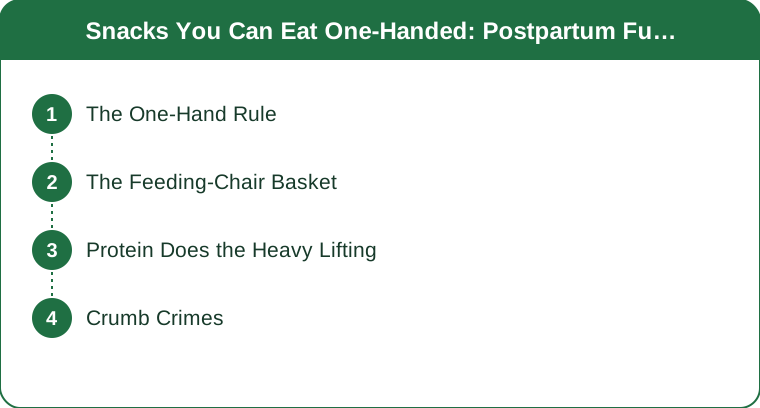
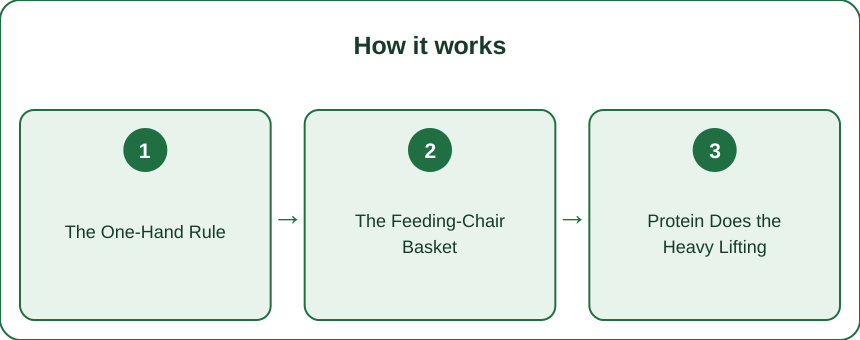
What Is the One-Hand Rule?
If it needs two hands, a plate, or reheating, it will not get eaten.
That’s the entire filter. Run every snack idea through it before it goes on a shopping list.
Passes the test: boiled eggs, cheese sticks, bananas, energy balls, yogurt pouches, jerky, single-serve nut butter packets, trail mix in a wide-mouth jar, oat bars, clementines (peeled in advance — this matters), hummus cups with pre-cut peppers.
Fails the test: anything requiring a fork, anything that needs cutting, anything that goes in a microwave, and anything that arrives on a plate rather than in a hand.
The fourth-trimester food pyramid is shaped like your free hand. Build accordingly.

How Do You Set Up a Feeding-Chair Snack Station?
Station the food where the hunger happens. Not the kitchen — the chair.
What goes in the basket:
- 2–3 shelf-stable protein items (jerky, nut packets, protein bars)
- Something with actual carbohydrate for the 3am energy crash (oat bar, dried fruit)
- A 32oz water bottle with a straw lid — nursing thirst is genuinely ferocious, and a straw lid is the difference between drinking and spilling
- Burp cloth, phone charger, lip balm, TV remote
The nightly restock. Two minutes before bed, top it up. This is the habit that makes the whole system work, and it’s the one people skip.
Set up a second basket wherever you feed at night if that’s a different room. Duplicating a $12 basket is cheaper than a 3am walk to the kitchen.
What Nobody Tells You About Postpartum Snacking
- Protein does the heavy lifting. Repair and milk production both need it, and it’s the macronutrient most likely to be missing at 3am. A Greek yogurt pouch (15g) or jerky stick (11g) quietly outworks the entire sleeve of crackers you were about to inhale.
- Thirst masquerades as hunger while nursing. Drink first, wait five minutes, then decide. Roughly half the time, the water was the answer.
- Some foods are structurally incompatible with a baby on your chest. Croissants are beautiful and treasonous. Powdered anything, flaky anything, and crumbly granola all belong to daylight, two hands, and witnesses.
- You will forget to eat entirely on the hard days. Set a phone alarm for a mid-morning and mid-afternoon snack in the first six weeks. It feels ridiculous and it works.
- Freezer-prepped one-handed food is the best baby shower gift. Nobody asks for it, everyone needs it — this is the one that surprises people who’ve never done the fourth trimester.
What Should You Actually Buy at the Store?
A realistic shopping list, roughly a week’s worth:
Protein (the priority): Greek yogurt pouches, string cheese, pre-boiled eggs, beef or turkey jerky, single-serve nut butter packets, cottage cheese cups, protein bars with 15g+.
Carbohydrate for energy: oat bars, dried apricots, bananas, whole-grain crackers in a resealable tub.
The extras that matter: clementines, hummus cups, pre-cut veggie sticks, trail mix.
One useful trick: batch-make energy balls on a Sunday — oats, nut butter, honey, seeds, rolled and frozen. They take 15 minutes, keep for a month, and are the single most one-hand-friendly food that exists.
Frequently Asked Questions
How many extra calories do you need while breastfeeding?
Roughly 450–500 extra calories a day for exclusive breastfeeding, though this varies with supply and body size. Most people find it easier to meet through 2–3 substantial snacks than by enlarging meals, since meals are the ones most likely to get interrupted.
Do I need to avoid certain foods while nursing?
Most people don’t need to avoid anything. Caffeine and alcohol pass into milk in small amounts and are worth moderating, and a small number of babies react to dairy or soy in the parent’s diet — but blanket elimination diets aren’t recommended without a specific reason. Talk to your provider before cutting food groups.
What snacks help with postpartum energy crashes?
Pair protein with a slower carbohydrate: yogurt with oats, nut butter with a banana, cheese with whole-grain crackers. Sugar alone spikes and drops within an hour, which is exactly the wrong pattern at 3am when you’ve got another two-hour stretch ahead.
How long does the intense postpartum hunger last?
For non-nursing parents, it typically eases within 6–8 weeks as tissue repair completes. For those nursing, elevated appetite generally continues throughout, often peaking around the 3–6 month mark when milk volume is highest.
When to Check In With a Professional
Persistent dizziness, unusual fatigue beyond normal new-parent exhaustion, or hair loss beyond the expected postpartum shedding can point to low iron or thyroid changes — both are common after birth and both are easily tested. Talk to your provider rather than self-treating with supplements.
If eating feels genuinely difficult, if food is causing distress, or if low mood is making it hard to care for yourself, please reach out to your OB, midwife, or a maternal mental health professional. Postpartum depression and anxiety are common and very treatable, and appetite changes are frequently one of the earliest signals.
This article is for general information and isn’t medical or nutritional advice.
TL;DR:
- If it needs two hands, a plate, or reheating, it won’t get eaten. That’s the whole filter.
- Nursing costs ~450–500 extra calories a day, and broken sleep raises hunger hormones on top.
- Build a basket beside the feeding chair: protein, a carb, a 32oz straw bottle. Restock nightly.
- Prioritize protein — aim for 10g+ per snack. Yogurt pouches, jerky, eggs, cheese sticks.
- Drink first, wait five minutes, then decide. Half the time the thirst was the hunger.
See It in Motion
Seen here: Maternity Capris with Side Pockets — shop it on bubblelime.com
Keep Reading
This article is for general informational and styling purposes only. Fit, sizing, and product availability may vary.