Why Your Wrists Ache From Holding Your Baby (and How to Fix It)

Quick Answer: Wrist and thumb ache after having a baby usually comes from repeating the same grip hundreds of times a day, while hormones from pregnancy and breastfeeding leave the tendons more sensitive. The fix is less about rest and more about changing how you hold, spreading the load across your forearm and shoulder, and doing short daily strength work. If the pain is sharp, sits on the thumb side of the wrist, or keeps getting worse after two to three weeks, see a doctor or hand therapist.
You pick the baby up about forty times before lunch. Every time, you hook your fingers under the head, grip the car seat handle, and lift with your wrist bent. By the afternoon, your thumb feels like it has a bruise inside it. You shake your hand out and try not to think about it.
That ache is so common that many new parents assume it’s just part of the deal. Some of it is. But there’s a clear reason it happens, and a few changes that make a real difference within a couple of weeks.

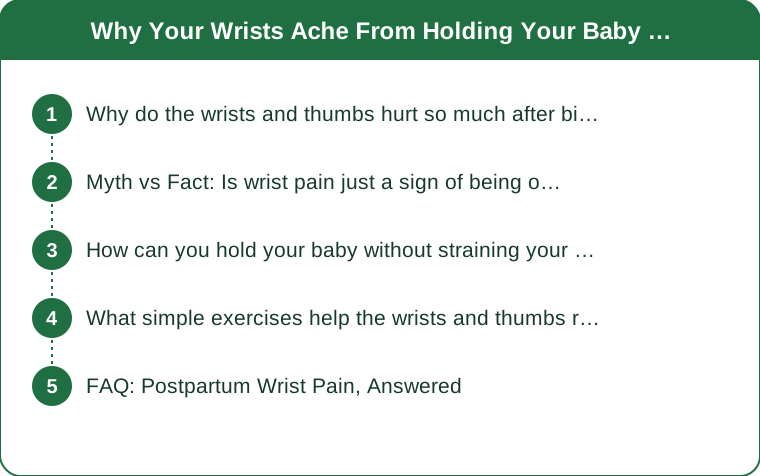
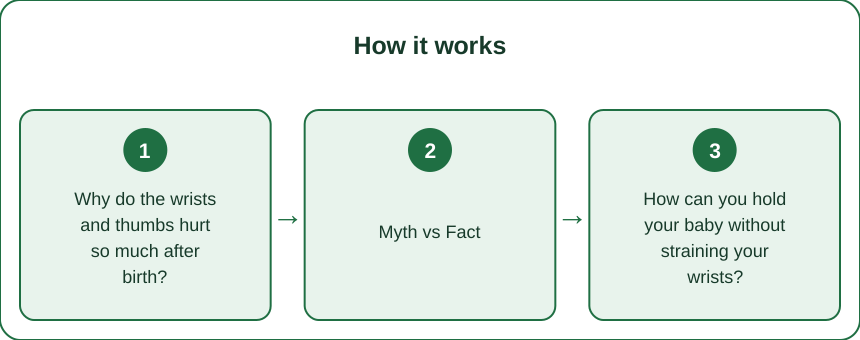
Why do the wrists and thumbs hurt so much after birth?
Your wrist tendons run through a narrow tunnel on the thumb side and the back of the hand, and they glide back and forth every time you grip, twist or lift. Under normal conditions they handle this without complaint.
Postpartum changes make them more sensitive. Pregnancy hormones, especially relaxin, loosen ligaments throughout the body, and that looseness can linger for months. Fluid can also build up in the wrist during pregnancy and the weeks after, which narrows the tunnels that the tendons pass through. Breastfeeding, which keeps hormone levels shifting, may add to this for some people.
Then there’s the workload. A newborn weighs 8 to 10 pounds at first, and a six-month-old can weigh 15 pounds or more. Most of the time you’re lifting them with a bent wrist and a pinching grip, which puts the most strain on the thumb side. Repeating that movement dozens of times a day is exactly the kind of load that irritates tendons.
Myth vs Fact: Is wrist pain just a sign of being out of shape?
Myth: wrist and thumb pain means you’re weak and need to exercise harder.
Fact: the pain is mostly about load, position and tendon sensitivity. Strong hands help, but the biggest wins come from changing how you hold the baby and taking pressure off the thumb.
Many parents get worse when they try to fix it with heavy grip work too early. Squeezing a hard ball or doing heavy wrist curls while the tendons are irritated can make the flare last longer. Gentle, pain-free strength work is the better path.

How can you hold your baby without straining your wrists?
Small changes in position help a lot, and they don’t require any special equipment.
- Use your forearm, not your fingers. Slide the baby onto your forearm with your wrist straight, so the bones and joints carry the weight instead of the tendons.
- Keep the wrist neutral. Avoid bending the wrist backward to scoop the baby up. Bend at the knees and hips and let the elbow do the lifting.
- Share the load. Use a carrier or sling for longer stretches, and let a partner take the car seat whenever possible.
- Lift the car seat by the body, not the handle. A seat that’s hung off a bent wrist can add a lot of strain over a day.
- Change arms often. Switching sides every few minutes spreads the work and stops one thumb from doing all the pinching.
What simple exercises help the wrists and thumbs recover?
Short, gentle exercises done daily tend to work better than long sessions done once a week. Start with a few easy options:
- Thumb tendon glide: move from a flat hand to a fist, then to a hook, then to a flat hand again. Repeat 10 times, slowly.
- Wrist stretch: extend your arm, palm up, and gently bend the wrist down with the other hand for 15 seconds. Then palm down, same hold.
- Towel squeeze: wrap a small towel and wring it slowly, holding for 3 seconds, 10 reps. Stop if it hurts.
Do these once or twice a day for two to three weeks. If they make the pain sharper, back off and skip the grip work until you’ve seen someone.
FAQ: Postpartum Wrist Pain, Answered
Should I wear a wrist splint at night?
Many people find a light splint at night helps, especially if the pain wakes them up. Choose one that keeps the wrist in a neutral position rather than a rigid brace that locks the thumb. Ask a hand therapist to check the fit.
Can I still breastfeed with wrist pain?
Yes, in most cases. Use a pillow to bring the baby up to you so your wrist isn’t bent to support their head, and rest your forearm on the pillow rather than holding it up.
When is wrist pain a reason to see a doctor?
See a doctor or hand therapist if the pain is sharp, lasts more than a few weeks, causes swelling or numbness in the fingers, or gets worse instead of better. Numbness, tingling in the first three fingers, or weakness in the hand needs a faster check.
This is general information, not medical advice.
TL;DR:
- Wrist and thumb ache after birth comes from repeated gripping and lifting, plus pregnancy-related looseness and fluid that make the tendons more sensitive.
- Lift with your forearm and a straight wrist, let the elbow do the work, and share the car seat and carrying with a partner.
- Do gentle tendon glides, wrist stretches and light towel squeezes once or twice a day. Skip heavy grip work until the pain calms.
- Get checked if the pain is sharp, lasts past a few weeks, or comes with numbness or swelling.
You don’t have to tough out a sore thumb for months. Small changes in how you lift, a few minutes of daily movement, and a quick check if it doesn’t settle will get you back to carrying your baby without the wince. This is general information, not medical advice.
See It in Motion
Seen here: Maternity Capris with Side Pockets — shop it on bubblelime.com
Keep Reading
This article is for general informational and styling purposes only. Fit, sizing, and product availability may vary.