Why Your Postpartum Recovery Timeline Resets When You Go Back to the Office

Quick Answer: Going back to the office resets postpartum recovery because it removes your recovery window (naps, flexible movement breaks, daytime rest) all at once, not gradually. Protect it by shrinking your routine to 15 minutes instead of cutting it, and treating week one back as a deload week, not a normal week.
You finally had a rhythm. Ten weeks postpartum, your core work was consistent, your walks were getting longer, and your body felt like it was actually healing. Then leave ended, and within four days it felt like month two again — tight hips, a tired lower back, and zero energy for the routine that was working. That’s not a failure of discipline. It’s a predictable, physical response to losing your recovery infrastructure overnight.

Why does returning to work undo weeks of postpartum progress?
Because postpartum recovery isn’t just about the exercises you do — it’s about everything around them. On leave, you had unscheduled rest built in: a nap when the baby napped, a slow morning, the option to lie down if your back flared. Those aren’t extras. They’re part of how postpartum tissue actually heals.
When you go back to work, all of that disappears in a single week, not gradually. You’re suddenly sitting for 8 hours, sleep-deprived without a recovery buffer, and mentally taxed in a completely new way. Your body reads this as a sudden increase in total stress load, even if your workouts stayed exactly the same. The result is the same fatigue and tightness you felt weeks earlier, even though you technically haven’t lost fitness — your recovery capacity just got cut in half overnight.
How much does sitting all day actually affect postpartum healing?
More than most people expect. Postpartum hips and pelvic floor tissue are still recalibrating pressure and position for months after birth, and prolonged sitting changes that pressure distribution in a way standing or moving doesn’t.
After 6-8 hours in a chair, many postpartum bodies report the same pattern: hip flexors tighten, glutes feel switched off, and the lower back takes over work the deep core should be doing. This isn’t dangerous, but it does mean the muscles you spent weeks reactivating go quiet again during the workday — so you’re essentially re-teaching them every evening instead of building on yesterday’s work.
A 2-minute stand-and-walk every hour, even just to a printer and back, meaningfully reduces this reset effect. It’s not about adding a workout to your day. It’s about not losing what you already built.
What happens to your pelvic floor when your workout window disappears?
The pelvic floor is the part that suffers most silently. On leave, movement was spread through the day — a walk here, a set of squats there — which is actually the ideal loading pattern for a healing pelvic floor: frequent, low-intensity, well-spaced.
Back at work, that pattern often collapses into one thing: nothing all day, then a single intense session in the evening if you have energy left, which you usually don’t. A pelvic floor that was getting gentle, distributed loading suddenly gets either total rest or one hard push — neither of which supports steady healing.
If you notice new heaviness, leaking, or pressure in the weeks after returning to work, that’s your body flagging this exact mismatch. It’s common, it’s fixable, and if it doesn’t improve within 2-3 weeks of adjusting your routine, that’s a see-a-professional situation — a pelvic floor physical therapist, not something to push through.
Myth vs Fact: Postpartum Return-to-Work Fitness
Myth: If your workouts stayed the same, your recovery should too. Fact: Recovery depends on total daily load, not just workout minutes. The same 20-minute routine performed on top of an 8-hour workday and disrupted rest is a different physiological event than the same routine on leave.
Myth: Feeling worse means you’re overtraining. Fact: Most of the time it means you’re under-recovering, not overtraining. The fix isn’t fewer workouts — it’s protecting the sleep, sitting breaks, and rest that recovery actually depends on.
Myth: You should push through the first week back to build the new habit fast. Fact: The opposite works better. Treating week one back as a deliberate deload — lighter, shorter, non-negotiable — protects the habit long-term instead of burning out by week two, which is when most people quietly quit.
How do you rebuild a routine around an 8-hour workday?
Shrink the session before you cut the habit. A 15-minute routine done consistently through the transition beats a 40-minute routine that gets skipped three days a week once real life resumes.
Three adjustments that actually hold up:
- Move the session to lunch, not evening. Evening energy after a full workday plus childcare handoff is the least reliable time slot postpartum bodies have.
- Anchor it to something automatic, like right after you close your laptop or right when the sitter arrives — not ‘whenever I have time,’ which rarely comes.
- Cut volume before you cut frequency. Three 10-minute sessions a week protects the habit better than one 45-minute session, because a broken streak is harder to restart than a short one is to keep going.
The goal for the first month back isn’t progress. It’s not losing ground while your schedule stabilizes.
What’s different about week one back versus week four back at work?
Week one is almost entirely about logistics and nervous system stress — new schedule, new childcare handoff, new sleep pattern. Physically, your body is still running on leave-level recovery, so soreness and fatigue in week one often come from the transition itself, not your workouts.
By week four, the schedule stress has usually settled, but a different problem shows up: accumulated sleep debt. This is when most people notice their workouts feel harder even though nothing about the exercises changed. This is expected, not a sign you’re doing something wrong — it’s the point where dialing intensity down 10-20% for a week, rather than pushing through, gets you back on track faster than grinding does.
By week six to eight, most postpartum bodies re-stabilize into the new rhythm, provided the routine stayed consistent even in its shrunk form during weeks one through four.
FAQ: Postpartum Return-to-Work Fitness Questions, Answered
How long should I wait after returning to work before increasing workout intensity?
Give yourself 2-3 full weeks at reduced volume first. Increase intensity only after your sleep and stress load feel stable, not on a fixed calendar date — the schedule chaos of week one rarely resolves that fast.
Is it normal for postpartum symptoms to come back after returning to work?
Yes, mild flare-ups of tightness, fatigue, or pelvic pressure are common in the first few weeks back and usually settle within 3 weeks as your body adapts to the new load. New or worsening leaking, pain, or heaviness that doesn’t improve is worth a pelvic floor PT visit.
Should I tell my workplace I need movement breaks for postpartum recovery?
If your workplace allows any flexibility, a 2-minute stand-and-walk every hour is a reasonable, low-friction ask that meaningfully protects healing tissue — framing it as a standard ergonomic break rather than a medical disclosure is usually the simplest approach.
TL;DR:
- Returning to work resets postpartum recovery because it removes rest and movement breaks all at once, not because your fitness dropped
- Prolonged sitting quiets the hips and core muscles you spent weeks reactivating — a 2-minute walk every hour protects that work
- Treat week one back as a deload, not a normal week; shrink your routine to 15 minutes instead of skipping it
- New or worsening pelvic floor symptoms that don’t settle in 2-3 weeks warrant a pelvic floor PT, not more pushing through
The goal for your first month back isn’t progress — it’s holding the line while your schedule stabilizes. This is general information, not medical advice.
See It in Motion
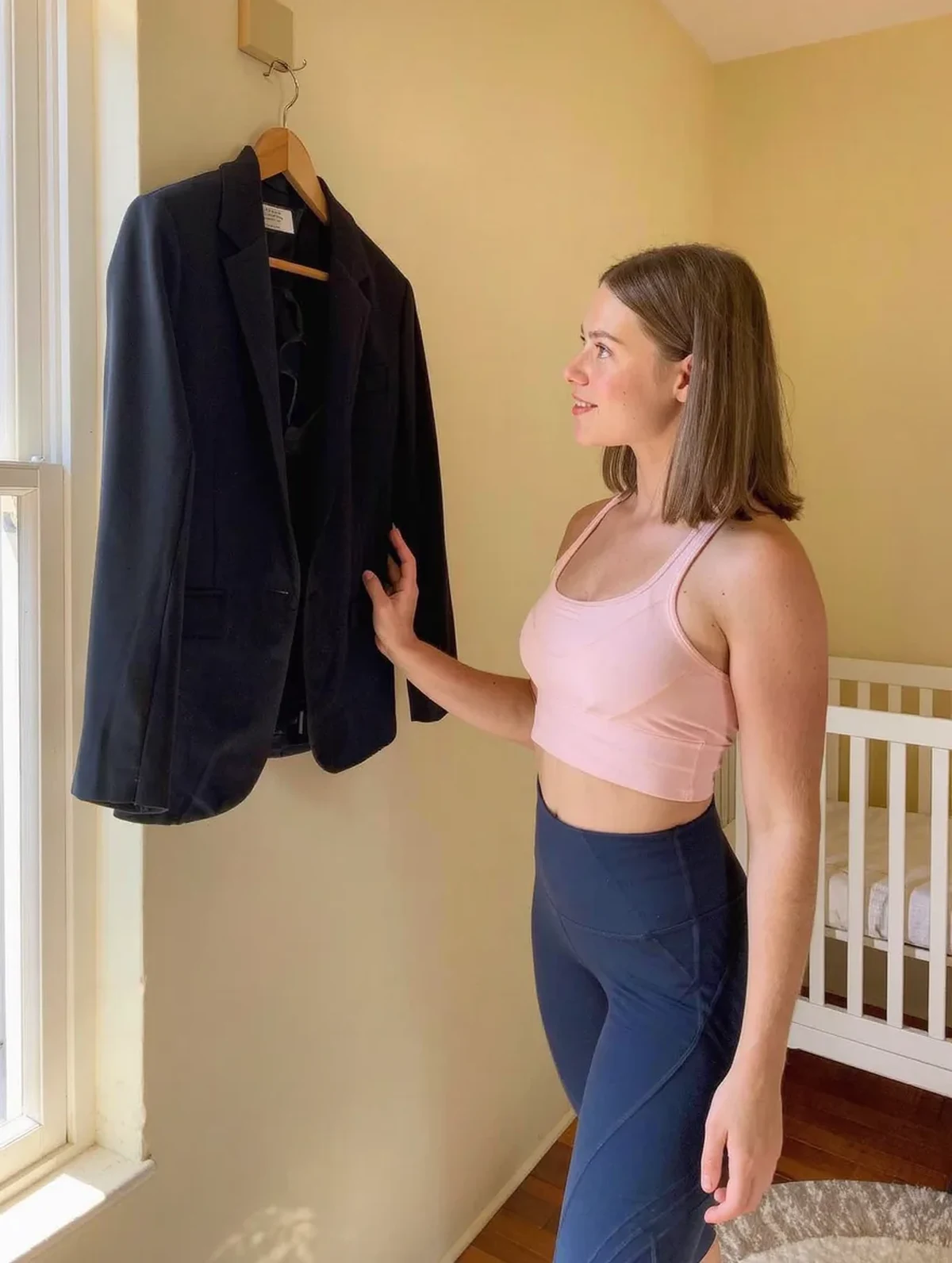
Seen here: Maternity Capris with Side Pockets — shop it on bubblelime.com
Keep Reading
This article is for general informational and styling purposes only. Fit, sizing, and product availability may vary.