Returning to Running After Birth: The Complete Timeline

Quick Answer: Most guidance suggests waiting at least 12 weeks postpartum before returning to running, and using that time to rebuild pelvic floor and load-tolerance capacity rather than simply waiting. Before your first run, you want to manage a 30-minute walk, single-leg work, and light hopping without symptoms. Progress with walk-run intervals, and treat leaking, heaviness, or pain as a signal to step back rather than push through.
The six-week check clears you for exercise, and it is widely misread as clearance for running specifically. Those are different things, and the gap between them is where most postpartum running injuries and setbacks live.

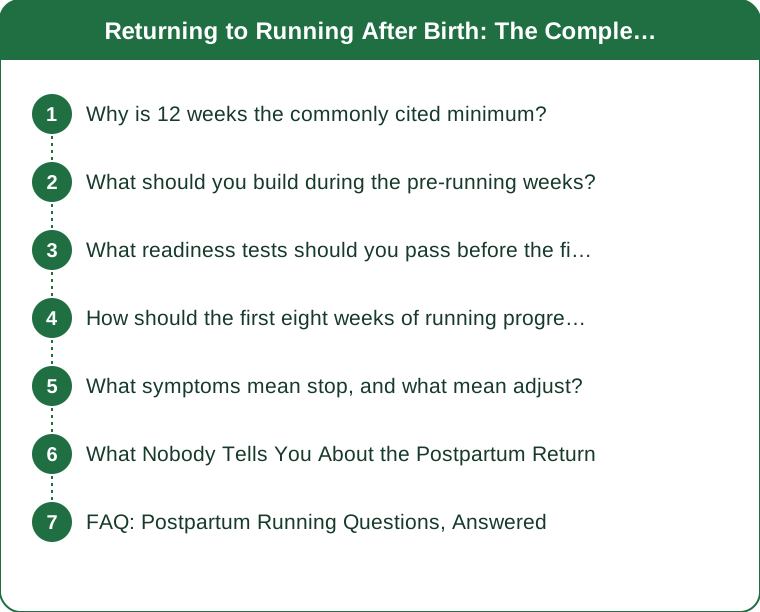
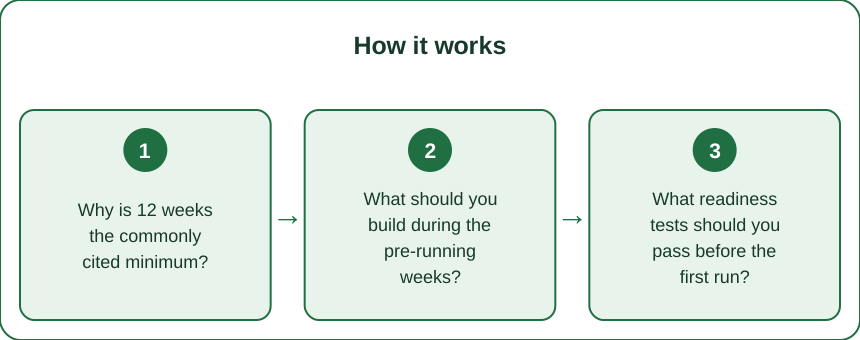
Why is 12 weeks the commonly cited minimum?
Because running is not simply exercise - it is a repeated impact load with specific demands, and the tissues involved recover on their own schedule regardless of how good you feel.
Running applies roughly two to three times body weight in ground reaction force with each step, and it does so around 160 to 180 times per minute. The pelvic floor, abdominal wall, and connective tissue all absorb part of that. In the early postpartum period these tissues are still remodelling, and hormonal changes affecting connective tissue laxity can persist well beyond six weeks, particularly while breastfeeding.
The 12-week figure comes from postpartum return-to-running guidance developed by pelvic health physiotherapists, and it is a minimum, not a target. Some people are ready around then. Many are not, and being not-ready at 12 weeks is entirely ordinary rather than a sign of poor recovery.
Several factors extend the timeline reasonably:
- Caesarean birth, where abdominal wall healing adds time
- Significant perineal tearing or any repair
- Diastasis recti that has not yet improved in function
- Ongoing pelvic floor symptoms of any kind
- Sleep deprivation severe enough to impair tissue recovery, which is most people
What matters far more than the calendar is what you did with those weeks. Twelve weeks of deliberate rebuilding produces a very different runner from twelve weeks of waiting.
A further point that gets lost: this is not a restriction being imposed on you. The rebuilding phase is what makes the return sustainable, and skipping it is the most common reason someone returns at 10 weeks, develops symptoms at 14, and is still dealing with them at 30.
What should you build during the pre-running weeks?
Four capacities, and they progress in roughly this order. None of it requires a gym.
1. Breathing and pelvic floor coordination (from early on, with clearance). The pelvic floor works with the diaphragm. Before strengthening anything, the coordination needs to work - relaxing on the inhale, lifting on the exhale. Many postpartum pelvic floors are not weak so much as held tight and poorly coordinated, and strengthening a tight floor makes symptoms worse. This is the strongest argument for seeing a pelvic health physiotherapist rather than self-prescribing kegels.
2. Walking volume (weeks 2 to 8, gradually). Build to a comfortable 30 minutes of continuous walking without heaviness, leaking, or pain afterwards. This sounds modest. It is the foundational load tolerance test and a large fraction of people at 8 weeks cannot yet do it symptom-free, which is exactly the information you need before adding impact.
3. Strength, particularly single-leg (weeks 6 to 12). Running is a series of single-leg landings. Build:
- Sit-to-stand, 3 sets of 10, progressing to slower tempo
- Single-leg glute bridge, 3 sets of 8 per side
- Step-ups to a low step, 3 sets of 8 per side
- Calf raises, 3 sets of 15 - the calf is a major shock absorber and is consistently under-trained
- Side-lying hip abduction, 3 sets of 12 per side
4. Impact tolerance (weeks 10 onward). Introduced last and gradually: bilateral hopping in place, then single-leg hopping, then a light jog on the spot. Any leaking or heaviness here means you are not ready for running yet - which is useful, cheap information that costs you nothing to discover on the living room floor rather than two kilometres from home.
What readiness tests should you pass before the first run?
This set is drawn from pelvic health return-to-running guidance and it is deliberately unglamorous. Do it all in one session, symptom-free.
Load tolerance:
- Walk 30 minutes at a normal pace, no symptoms during or after
- Single-leg balance, 10 seconds each side
- Single-leg squat, 10 reps each side, controlled
- Jog on the spot, 1 minute
- Forward bounds, 10 reps
- Hop in place, 10 reps each side
- Single-leg running man (opposite arm and leg drive), 10 reps each side
Strength:
- Single-leg calf raise, 20 reps per side
- Single-leg bridge, 20 reps per side
- Side-lying abduction, 20 reps per side
Symptom-free means: no urinary or faecal leaking, no heaviness or dragging in the pelvis, no pain, no visible doming along the midline of the abdomen, and no symptoms appearing later that day or the next morning.
The next-day check is the one people skip. Symptoms frequently appear hours after rather than during, so a test that felt fine at 10am and produced heaviness at 8pm is a failed test. Note how you feel the following morning before concluding you passed.
Failing any part is not a verdict - it is a specific piece of information about which capacity to build for another few weeks. Most people who fail, fail on the same one or two items, which tells you exactly where the work is.

How should the first eight weeks of running progress?
Slowly, in intervals, and with far more walking than feels necessary.
Weeks 1 to 2: Walk 5 minutes to warm up, then 1 minute jog / 2 minutes walk, repeated 6 times. Total running time: 6 minutes. Twice a week, never on consecutive days.
Weeks 3 to 4: 2 minutes jog / 2 minutes walk, 6 times. Total running: 12 minutes. Still twice a week.
Weeks 5 to 6: 3 minutes jog / 1 minute walk, 6 times. Total running: 18 minutes. Consider a third session only if the first two are entirely symptom-free.
Weeks 7 to 8: 5 minutes jog / 1 minute walk, 4 times. Total running: 20 minutes continuous-ish.
Rules that matter more than the numbers:
- Repeat any week that produced symptoms. Repeating is progress; pushing through is not.
- Never increase duration and frequency in the same week. One variable at a time.
- Keep the pace conversational. Speed comes last, months later.
- Softer surfaces early - grass, track, or trail reduce impact meaningfully compared with pavement.
- Empty your bladder before running, but do not restrict fluids, which is a common and counterproductive workaround.
If you are breastfeeding, a supportive bra matters more than usual and comfort may vary considerably with feed timing - many people prefer to run shortly after a feed.
What symptoms mean stop, and what mean adjust?
The distinction is worth being precise about, because the internet tends toward two unhelpful extremes.
Stop and seek assessment:
- Any urinary or faecal leaking during or after running
- A sense of heaviness, dragging, or bulging in the vagina
- Pelvic, back, or hip pain that persists after the session
- Visible doming or coning along the midline of the abdomen under load
- Bleeding that returns or increases after activity
- Pain during intercourse or tampon use that is new
None of these mean something has gone permanently wrong. They mean the current load exceeds current capacity, and they are highly treatable - particularly when addressed early, which is the argument for not pushing through for another six weeks to see if it settles.
Adjust rather than stop:
- General muscular soreness for a day, easing normally
- Feeling more tired than expected - reduce frequency, keep going
- Mild breast discomfort - a fitting and support issue
- Feeling unfit and slow, which is universal and not a symptom
See a pelvic health physiotherapist if any stop-list symptom appears, and honestly, ideally before the return regardless. In many places you can self-refer. An assessment gives you an internal picture that no online test can, and it frequently identifies a tight rather than weak pelvic floor - a distinction that entirely changes what you should be doing.
This is general information, not medical advice. Individual circumstances after birth vary widely, and a clinician who has assessed you is always the better source.
What Nobody Tells You About the Postpartum Return
Sleep deprivation affects tissue recovery and running form measurably. On a night of broken sleep, the sensible choice is a walk. Running on very little sleep raises injury risk through impaired coordination, and the session gains you little.
Your ribcage and breathing pattern changed during pregnancy. The ribs widen and the diaphragm’s position shifts. Many people return to running with a breathing pattern that has not reorganised, which shows up as early breathlessness at paces that used to be easy. It resolves, but it feels alarming if nobody warned you.
Return-to-running timelines are unrelated to how fit you were before. A prior marathon runner and a prior non-runner face similar tissue-healing timelines. Prior fitness helps with strength rebuilding, not with connective tissue remodelling, and previously fit runners are the group most likely to return too early because the effort feels so easy.
Feeding a baby costs energy. Breastfeeding adds a meaningful daily energy demand. Returning to running while under-eating produces fatigue, poor recovery, and in some cases menstrual and bone health consequences. Eat more than feels intuitive.
The pram run is a different activity. Pushing changes your arm swing, trunk rotation, and posture significantly, loading one side asymmetrically if you push one-handed. Build your return with unencumbered runs first, and treat pram running as a later addition rather than the way back in.
Two years is a normal timeline for full return. Not for running at all - for feeling like your running self again. The 12-week figure is when running can begin, and the distance between beginning and feeling normal is much longer than social media suggests. Knowing that in advance prevents an enormous amount of unnecessary discouragement.
FAQ: Postpartum Running Questions, Answered
Can I run before 12 weeks if I feel fine?
Feeling fine is not the same as tissue readiness, since the pelvic floor and abdominal wall recover on their own schedule and give limited early feedback. If you want to start earlier, an assessment by a pelvic health physiotherapist is the reasonable route rather than a self-decision.
Does a caesarean birth mean a longer wait?
Generally yes. Abdominal wall healing after major surgery adds time on top of the usual considerations, and the same readiness tests apply plus scar mobility and abdominal load tolerance. Discuss specifics with your care provider.
Is leaking a little bit normal after birth?
Common, yes - but common is not the same as something to accept permanently. Leaking during running is a clear signal that load exceeds capacity right now, and it responds well to treatment. It is one of the most treatable things a pelvic health physiotherapist deals with.
What if I have diastasis recti?
A gap itself is less important than how well the abdominal wall generates tension across it. Many people with a measurable separation return to running successfully once function improves. Assessment matters more than the width of the gap.
How do I fit this in with a newborn?
Shorter and more frequent beats long and rare, and walking counts as genuine training in this phase. Two 20-minute sessions a week is a real return-to-running programme, not a compromised one.
TL;DR:
- 12 weeks is a common minimum for returning to running, and it is a floor rather than a target
- Use the pre-running weeks actively: breathing and pelvic floor coordination, walking volume, single-leg strength, then impact
- Pass a readiness test - 30-minute walk, single-leg work, hopping - symptom-free, including the next morning
- Progress with walk-run intervals, twice weekly, repeating any week that produced symptoms
- Leaking, heaviness, pain, or doming means step back and see a pelvic health physiotherapist, not push through
- Feeling like your running self again commonly takes far longer than 12 weeks, and that is normal
The postpartum return rewards patience in a way very little else in training does. The weeks spent building capacity before the first run are not a delay to the comeback - they are the comeback, and they are what makes the running that follows last. This is general information, not medical advice; a pelvic health physiotherapist who has assessed you is always the better guide.
See It in Motion
Seen here: Maternity Capris with Side Pockets — shop it on bubblelime.com
Keep Reading
This article is for general informational and styling purposes only. Fit, sizing, and product availability may vary.