Returning to Running After Baby: A Gentle Roadmap

Your six-week appointment happened. Someone said “cleared for exercise.” You have running shoes by the door and a body that feels — mostly — like it wants to go.
Here’s the part that appointment probably didn’t cover in detail: “cleared for exercise” is not the same as “ready to run.” Those are two different thresholds, and the gap between them is where most postpartum running setbacks happen.
Quick Answer: Running is high-impact, and the tissues that manage that impact — pelvic floor and deep core — need rebuilding time regardless of how energetic you feel. Build a base with weeks of brisk walking first, then pass a simple readiness check: hop, jog in place, and single-leg balance, all without pain, heaviness, or leaking. Then start with run-walk intervals — one minute jogging, two minutes walking — and increase gradually. Many pelvic health physios suggest around 12 weeks postpartum at the earliest for return to running.

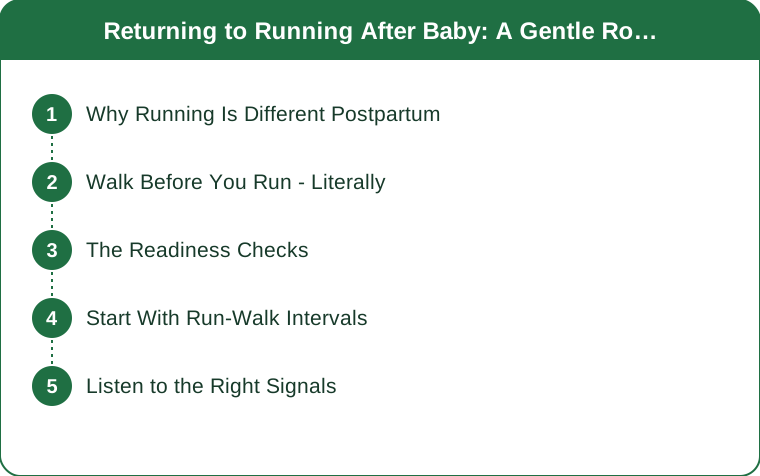
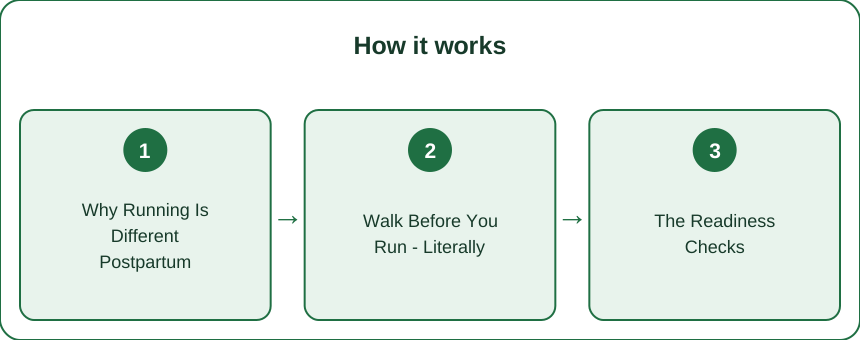
Why Is Running Different From Other Postpartum Exercise?
Because of what impact asks for.
Running generates ground reaction forces of roughly two to three times your body weight, repeatedly, for the duration of the run. Managing that load is a job — and the system that does it, your pelvic floor and deep core working together, has just been through nine months of progressive loading plus a birth.
Two things are worth separating here:
Feeling energetic and being tissue-ready are different. Energy returns before connective tissue does. Ligament laxity from pregnancy hormones can persist for months, particularly while breastfeeding, and the pelvic floor’s ability to generate quick reflexive contractions — which is exactly what’s needed at footstrike — takes time to come back.
The six-week clearance isn’t a running clearance. That appointment checks healing and screens for complications. It generally isn’t an assessment of whether your pelvic floor can handle repeated impact. Those are genuinely different questions, and the second one is the one running asks.
This is why many pelvic health physiotherapists suggest around 12 weeks postpartum as an earliest reasonable point for returning to running, with individual readiness mattering more than the calendar. That guidance isn’t about being cautious for its own sake — early return before the system is ready is associated with pelvic floor problems that are considerably harder to fix later than to avoid now.
Respecting the timeline is what makes the comeback permanent instead of a cycle of return-and-setback.
Walk Before You Run — Literally
This phase is boring and it’s the whole foundation.
Weeks of progressive brisk walking do three things at once: rebuild your aerobic base, gradually reload your joints and pelvic floor at a manageable intensity, and give you a low-stakes way to notice symptoms before they matter.
Build it up gradually — start with what feels comfortable and add time and pace over several weeks. The target to aim for before considering running: a 30-minute brisk walk that leaves you feeling strong and completely symptom-free, including afterward and the next day.
Alongside walking, this is the window for rebuilding rather than waiting:
- Pelvic floor work — both strength and, importantly, the ability to relax and coordinate. A pelvic health physio can assess this properly, and it’s genuinely worth doing if it’s accessible to you.
- Deep core and glutes — glute strength is a major contributor to how well you absorb impact, and glutes are commonly weak postpartum.
- Single-leg strength — running is a series of single-leg landings. Step-ups, single-leg bridges, split squats.

The Readiness Checks: How Do You Know You’re Ready?
Before your first run, you should be able to do each of these without pain, heaviness, dragging, or any leaking — during or afterward:
- Walk 30 minutes briskly
- Single-leg balance, 10 seconds each side
- Single-leg squat, 10 reps each side
- Jog in place, 1 minute
- Hop in place on one leg, 10 times each side
- Single-leg “running man” — hop while swinging the opposite arm and leg, 10 each side
These are the kind of self-checks pelvic health physios use, and they work because they test the specific demand running makes: repeated single-leg impact absorption.
Failing any of them isn’t a verdict — it’s information. It tells you which capacity needs work, and it means the test did its job. Keep building and retest in a few weeks.
What counts as a fail: any leaking, any sensation of heaviness or dragging in the pelvis, any pain, or a noticeable coning or doming down the midline of your abdomen. These aren’t things to push through or normalize. They’re common, which is not the same as normal, and they’re highly treatable — which is the actual reason to take them seriously now.
How Should You Start Running Again?
Run-walk intervals, and start smaller than feels satisfying.
Week 1: 1 minute jogging / 2 minutes walking, repeated. Total run time around 5–8 minutes inside a 20–30 minute walk.
Then progress by roughly 10% per week, extending run intervals before shortening walk intervals. Something like:
- Week 2: 1 min run / 90 sec walk
- Week 3: 2 min run / 90 sec walk
- Week 4: 2 min run / 1 min walk
Run every other day, not daily. The rest day is where adaptation happens, and it’s also when delayed symptoms show up — which you want to notice before the next session, not during it.
Two rules that matter more than the schedule:
- The next-day check is your real feedback. How you feel 24 hours later tells you more than how you felt during. Lingering fatigue, heaviness, or any leaking means the dose was too big — repeat the previous week rather than progressing.
- Repeat weeks freely. Progressing on your body’s schedule rather than the plan’s is the entire skill here. There’s no prize for week 6.
Practical notes: a supportive, well-fitted sports bra matters a lot, especially if you’re breastfeeding — get refitted rather than assuming your pre-pregnancy size. Empty your bladder before running, but don’t restrict fluids. And if you’re breastfeeding, feeding or pumping before a run is more comfortable.
What Signals Should You Listen To?
Stop and scale back for:
- Any urinary or bowel leaking
- Pelvic heaviness, dragging, or a bulging sensation
- Pain anywhere — pelvis, low back, hips, abdomen
- Coning or doming along your midline
- Increased or newly bright red bleeding
- Fatigue that persists into the next day
See a pelvic health physiotherapist if any of these persist, if you’re leaking at all, if you feel heaviness or a bulge, if you have abdominal separation that isn’t improving, or honestly if you’d simply like a proper assessment before starting. Many places allow self-referral, and it’s the single most useful thing you can do for a durable return.
Contact your doctor for heavy or bright red bleeding, fever, severe pain, or anything that feels genuinely wrong.
One more thing worth saying: sleep deprivation is real and it affects recovery, coordination, and injury risk in ways a training plan can’t account for. On a night that went badly, a walk instead of a run is a legitimate training decision, not a failure of discipline.
FAQ
How long after giving birth can you start running?
Many pelvic health physiotherapists suggest around 12 weeks postpartum as an earliest reasonable point, though individual readiness matters far more than the number of weeks. The more useful test is whether you can pass the readiness checks — 30-minute brisk walk, single-leg balance, hopping, jogging in place — without pain, heaviness, or leaking.
Is it normal to leak urine when running postpartum?
It’s common, and it isn’t normal in the sense of being something to accept. Leaking indicates your pelvic floor isn’t yet managing the impact load, and running through it tends to make it harder to resolve. It’s also highly treatable — a pelvic health physio is the right referral, and most people improve substantially with proper assessment and rehab.
Can you run if you have diastasis recti?
Often yes, with appropriate rehab and progression, but it’s worth an assessment first. The important sign to watch is coning or doming along your midline during exertion, which suggests the load exceeds what your deep core is currently managing. A physio can assess the separation, check function rather than just the gap width, and guide your return.
TL;DR:
- “Cleared for exercise” ≠ “ready to run.” The six-week check screens healing, not impact readiness.
- Running loads you at 2–3× body weight repeatedly; pelvic floor and deep core need rebuilding time regardless of energy levels.
- Many pelvic health physios suggest ~12 weeks as an earliest reasonable return, with individual readiness mattering more.
- Walk first — build to a symptom-free 30-minute brisk walk while rebuilding pelvic floor, glutes, and single-leg strength.
- Readiness checks: single-leg balance, single-leg squat, jog in place, single-leg hops, running man. All with no pain, heaviness, or leaking.
- Start at 1 min run / 2 min walk, progress ~10% weekly, run every other day.
- The next-day check is your real feedback. Repeat weeks freely; there’s no prize for week 6.
- Leaking, heaviness, or coning = see a pelvic health physio. Common, not normal, and very treatable.
See It in Motion
Seen here: Maternity Capris with Side Pockets — shop it on bubblelime.com
Keep Reading
This article is for general informational and styling purposes only. Fit, sizing, and product availability may vary.