Mom Wrist Is Real: The Thumb-Side Pain That Ambushes New Mothers

Quick Answer: Pain on the thumb side of the wrist that flares when you lift your baby is usually de Quervain’s tenosynovitis - irritation of two thumb tendons where they pass through a tight tunnel at the wrist. Postpartum hormones, fluid shifts, and hundreds of daily thumbs-up lifts make new mothers its biggest risk group. It settles with lifting technique changes, a thumb-spica brace, and gradual loading - and you can keep training through it with neutral-grip swaps.
Nobody put this one on the what-to-expect list. Somewhere between week four and month four, lifting your own baby starts producing a sharp catch above the thumb, and suddenly every pick-up, car seat, and stroller fold has a toll booth.

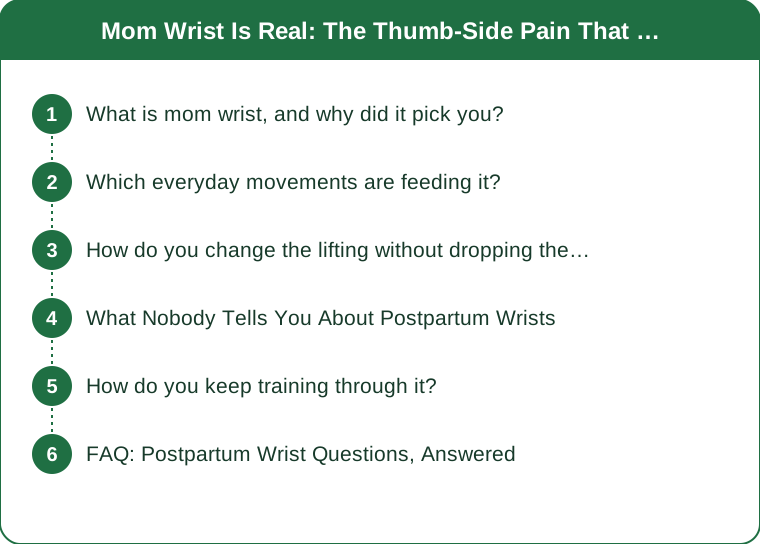
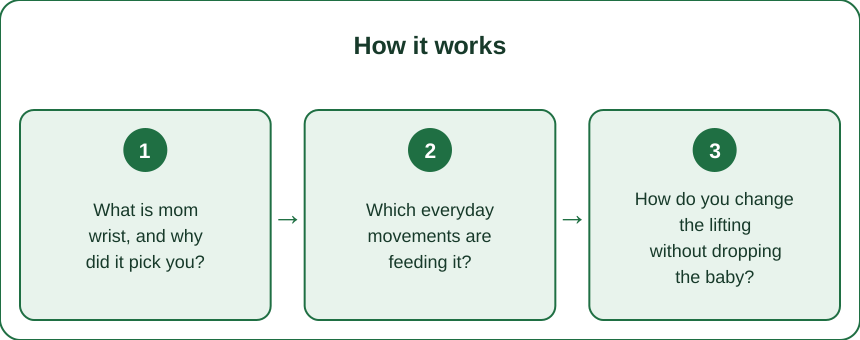
What is mom wrist, and why did it pick you?
The formal name is de Quervain’s tenosynovitis: two tendons that move your thumb - the ones that lift it away from your palm - run through a narrow fibrous tunnel on the thumb side of the wrist, and in de Quervain’s that tunnel and its lining become irritated and thickened. Every thumb and wrist movement then drags an inflamed tendon through a swollen tunnel, which is the sharp catch you feel.
Postpartum women are the classic case, for a stack of reasons:
- Repetition arrived overnight. A newborn gets lifted, held, latched, and repositioned dozens of times a day - a sudden jump from near-zero to hundreds of loaded thumb extensions daily, with no ramp-up period.
- The default lift is the worst one. Scooping a baby under the armpits spreads your thumbs wide away from your fingers and loads them sideways - precisely the position these tendons hate.
- Hormones and fluid are still in play. Pregnancy fluid retention narrows tunnel space, and postpartum hormonal shifts affect tendon and ligament behavior. Breastfeeding appears to extend the window for some women.
- Feeding positions hold the wrist bent for thirty-minute stretches, many times a day.
The telltale test doctors use: tuck your thumb into your fist and tilt the fist toward the pinky side. A sharp pain over the thumb-side wrist is strongly suggestive. Confirm with a professional rather than a fist - but if that just lit you up, keep reading.
Which everyday movements are feeding it?
The condition rarely improves on rest alone, because the aggravating movements happen 100 times a day whether you train or not. Finding your top three is most of the fix.
The under-the-armpits lift. Thumbs spread wide, baby’s weight hanging off them. This is feeding sessions of tendon load disguised as one second of convenience.
The head-support cradle. Supporting the head with a bent wrist and extended thumb - then holding that position for an entire feed.
The car seat carry. A loaded car seat dangling from one hooked hand is 15-plus pounds on a bent wrist. It deserves its reputation as the single worst object in postpartum life.
The stroller and pump ecosystem. One-handed stroller steering, pump flange holding, endless bottle-cap twisting - individually trivial, collectively a second shift for the same two tendons.
The phone. One-handed scrolling during feeds keeps the thumb working through its largest range under sustained static hold. It is genuinely part of the problem for most people.
Notice what is missing: exercise. Training gets blamed because the pain shows up under a dumbbell, but the dumbbell is the messenger. The baby-handling patterns are the volume; the workout is a rounding error - which is exactly why fixing the lift technique beats resting the gym.
How do you change the lifting without dropping the baby?
One principle covers nearly everything: keep the thumb next to the fingers and the wrist straight, and let the forearms and elbows do the lifting.
The scoop lift. Instead of gripping under the armpits with spread thumbs, slide both forearms under the baby - one under the head and shoulders, one under the bottom - and lift with your arms as a shelf, elbows close to your body. Thumbs stay parked against your index fingers, doing nothing. It takes a week to feel natural and removes the single largest daily load.
The feeding fix. Pillows take the baby’s weight, not your hands. Whatever hand supports the head should have a straight wrist - if you can see a bend, stack another pillow under your arm instead.
The car seat rule. Carry it with both hands hugged to your chest, or better, leave it clipped in the car and carry the baby. If you must hook it one-handed, use a straight-wrist forearm hook at the elbow crease, never the hand.
The symmetric swap. Everyone has a dominant lifting side, and it gets double the dose. Deliberately alternating sides halves the load on the angry one - crude and effective.
The phone amnesty. Feeds are long; prop the phone on a pillow or the arm of the chair and scroll with the non-painful hand. Small, constant, worth it.

What Nobody Tells You About Postpartum Wrists
It can arrive months after birth, and via the carrier stage. The classic onset is 4 to 12 weeks, but plenty of cases start at six or eight months - when the baby doubles in weight and starts being hauled on and off hips. Later onset is still the same condition with the same fixes.
Both wrists is common. Babies are a two-handed job. If one wrist hurts, start protecting the other now, because it is running the same program a few weeks behind.
The brace works while you sleep. A thumb-spica brace - the kind that immobilizes the thumb, not just a wrist wrap - does its best work overnight and during long feeds, when you will not need the hand anyway. Worn 24/7 it becomes its own problem; targeted hours beat total immobilization for most people.
Grandparents and partners get it too. Anyone who suddenly starts lifting a baby all day is running the same experiment. The technique fixes are for the whole household - and teaching your partner the scoop lift means the baby stops being lifted the bad way half the time by default.
It is not a strength problem, so grip exercises early on backfire. The tendon is irritated by motion through a swollen tunnel; squeezing stress balls adds motion. Strength work has a place - later, graded, once the sharp catch has settled.
Most cases resolve without anything dramatic. Technique change plus bracing settles a large share within 4 to 8 weeks. For the ones that persist, a corticosteroid injection has a strong track record for this specific condition - de Quervain’s is one of its genuine success stories. Persistent pain deserves an actual diagnosis rather than a longer wait.
How do you keep training through it?
You almost never need to stop - you need to reroute load around the thumb tunnel while it calms down.
Swap thumb-loaded grips for neutral ones. Dumbbell work with palms facing each other keeps the wrist in its friendliest position. Hammer curls instead of regular curls, neutral-grip presses and rows instead of pronated ones.
Take the wrist out of push-ups. Push-ups on dumbbell handles or push-up bars keep the wrist straight; a slight incline reduces the load further. Planks go to forearms.
Use straps or hooks for pulls, guilt-free. Rows and hinges load grip hard; lifting straps let the back train while the wrist convalesces. This is exactly what straps are for.
Kettlebells wait. The rack position and swing both drive the wrist through loaded angles. A few weeks off them is cheaper than a flare.
Lower body carries on untouched - squats, glute bridges, step-ups, walking. Most of a sensible postpartum program never touches the thumb.
Re-introduce gradually: when daily baby-handling is comfortable, add light wrist and thumb loading - radial deviation lifts with a soup can, gentle resisted thumb movements - a few minutes, every other day, staying under a mild-discomfort ceiling. Sharp catch means back off a step.
If pain came with numbness, tingling into the fingers, night waking with pins and needles, or followed any fall, get it assessed - other wrist conditions share this neighborhood. This is general information, not medical advice.
FAQ: Postpartum Wrist Questions, Answered
How long does mom wrist take to go away?
With technique changes and a thumb-spica brace, many cases settle substantially in 4 to 8 weeks. Cases that keep being fed by unchanged lifting habits can grind on for months - the timeline mostly reflects whether the daily load actually changed, not luck.
Is it carpal tunnel?
Different condition, same busy neighborhood. Carpal tunnel is nerve compression - numbness, tingling, night symptoms in the thumb-side fingers. De Quervain’s is tendon irritation - sharp, localized pain at the thumb side of the wrist with movement. Postpartum women get both, and a clinician can separate them in minutes.
Can I just push through it since I have no choice?
You have no choice about lifting your baby - you have full choice about how. The scoop lift, pillow-supported feeds, and a night brace are all compatible with full-time parenting. Pushing through with unchanged technique is how a six-week problem becomes a six-month one.
Does it come back with the next baby?
It can, since the same triggers return - but people who had it once start the technique habits from day one and usually fare far better. Consider the scoop lift a permanent upgrade rather than a rehab exercise.
TL;DR:
- Thumb-side wrist pain when lifting your baby is usually de Quervain’s tenosynovitis - tendon irritation, not weakness
- The under-the-armpits lift with spread thumbs is the main driver; scoop with forearms instead, thumbs parked
- A thumb-spica brace at night and during feeds, pillow-supported feeding, and two-handed car seat carries do the heavy lifting
- Keep training with neutral grips, push-up handles, and straps - lower body needs no changes at all
- Settling in 4 to 8 weeks is typical once daily technique changes; persistent, numb, or tingling versions deserve a proper assessment
The cruelest part of mom wrist is that the treatment - stop the aggravating lifting - sounds impossible when the lifting is your baby. It is not the lifting that has to stop. It is the thumbs-out version of it, and that swap costs one mindful week.
See It in Motion
Seen here: Maternity Capris with Side Pockets — shop it on bubblelime.com
Keep Reading
This article is for general informational and styling purposes only. Fit, sizing, and product availability may vary.