Why Nothing in the Postpartum Workout Wardrobe Fits Right (And What to Buy Instead)

Quick Answer: Postpartum is a third body shape, and activewear was designed for the other two. Maternity panels bag with nothing to fill them; pre-pregnancy leggings hit a midsection that’s still settling. What actually works: a wide, soft, high waistband placed above or well below a C-section scar, easy chest access, an adjustable sports bra, and gentle fabric rather than firm compression. Buy one piece for the body you have now and reassess at six and twelve weeks. This is general information, not medical advice.
You have a drawer of maternity leggings that now sag, and a drawer of old leggings that don’t go on.
There is no third drawer, because nobody makes the clothes that would go in it.
This is a design gap. It is not a report on your body.

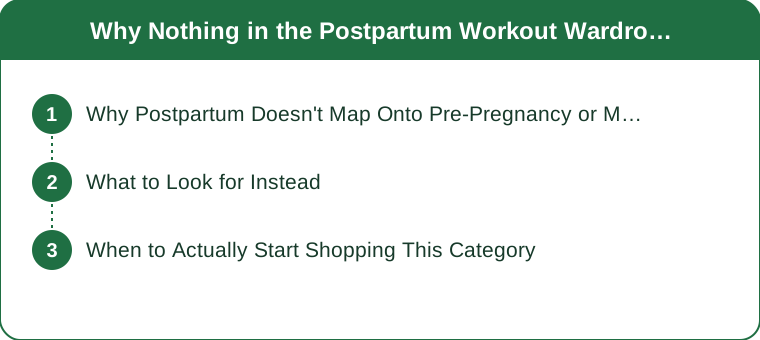
Why Doesn’t Anything Fit Right Now?
Five things, and only one of them is about size.
The midsection is a shape neither category anticipated. Swelling is still resolving and the uterus is still contracting back down — a process that takes around six weeks. The resulting profile is soft and shifting in a way pre-pregnancy cuts don’t accommodate and maternity cuts overshoot.
The maternity panel is now solving a problem you don’t have. It was engineered to stretch outward over a bump. With nothing to stretch over, it bunches, rolls, and slides down. It isn’t too big — it’s the wrong shape.
Abdominal separation changes what “support” means. Some postpartum bodies benefit from gentle abdominal support that neither regular activewear nor maternity wear was built to provide. Firm compression is not the same thing as appropriate support, and in some cases it’s the wrong answer entirely.
A C-section scar needs the waistband somewhere specific. A healing incision sits low. A mid-rise waistband lands directly on it. This is a placement problem, not a tightness problem — and it’s temporary, but it lasts months.
Chest size and sensitivity change independently. Postpartum and breastfeeding-related changes mean old sports bras can be uncomfortable or nonfunctional regardless of what the rest of your body is doing. Bra sizing during this window can shift week to week, sometimes within a single day.

What Should I Actually Look For?
A high, wide, soft waistband — placement over tightness. The band should sit either comfortably above a C-section scar or well below it, never directly on it. Wide bands distribute pressure and stay put; narrow ones roll. High waist leggings with a soft, non-compressive band are the single most useful piece in this category, and they’ll keep working long after this window closes.
Easy chest access. Front-opening or easily-lifted tops, not just nursing bras. If feeding requires taking a whole top off, you won’t wear it to work out.
Adjustable support, not fixed. Sports bras with adjustable bands and straps. Given how much chest size fluctuates in early postpartum, a fixed-fit bra bought in week two is often unwearable in week six. Adjustability buys you months.
Gentle, breathable fabric over compression. Standard activewear leans firm. During active healing you want soft and breathable, especially anywhere near an incision or an area that’s sensitive.
Buy for the body you have. The strongest temptation here is buying a size down as motivation. It backfires reliably — clothes that don’t fit make you less likely to move, during exactly the window when gentle movement is most valuable and most fragile as a habit.
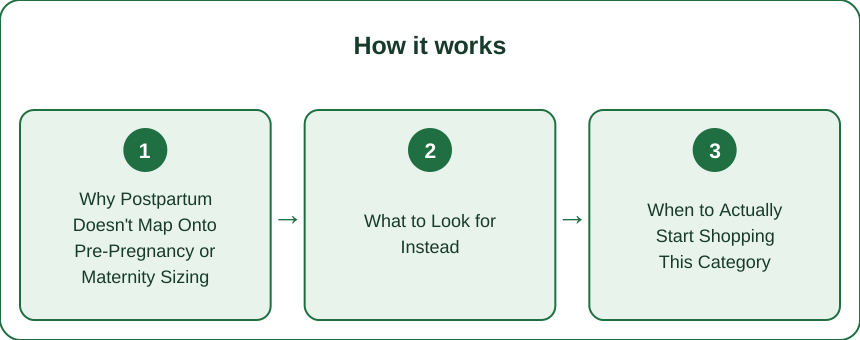
What Nobody Tells You About the Timing
Get cleared before you buy structured pieces. Anything with real compression or structure should wait until your provider has cleared you for exercise — typically around the six-week check, later after a C-section or a complicated delivery. Buying it earlier just means it sits in a drawer.
Buy one piece, not a wardrobe. Test a single high-rise soft-waistband legging before replacing everything. Your body keeps changing for months, and a full wardrobe bought at week three will be wrong by week ten.
Borrow or buy secondhand. Most people need this specific category for a few months. That’s an excellent case for secondhand, or for asking a friend who’s already through it. Full price for a three-month need is optional.
Reassess at six weeks and twelve weeks. Both are real inflection points where sizing and support needs shift again. Check rather than assume.
Comfort beats the calendar. If a piece still feels wrong at any point, that’s the signal — regardless of how many weeks have passed or what the internet says about timelines. Nothing should pull on a scar, restrict breathing, or create pressure that makes you want to take it off.
When to see a professional: talk to your provider or a pelvic floor physical therapist about any abdominal separation you can feel, leaking with movement, pelvic heaviness or pressure, or pain during exercise. Those are common, treatable, and specifically not things to work around with clothing choices. This is general information, not medical advice.
Mini FAQ
Do postpartum compression garments actually help?
Some people find gentle support helpful for comfort in early weeks. They aren’t a treatment for abdominal separation — that responds to appropriate exercise, ideally guided by a pelvic floor PT. Never use compression directly over a healing incision without provider clearance.
What size should I even order?
Order the size that fits your measurements today and ignore the number. Postpartum sizing bears little relationship to your pre-pregnancy size, and stretchy fabrics vary enormously between brands anyway.
When can I go back to regular activewear?
Most people find things fit reasonably again somewhere between three and six months, though for many the body’s proportions have genuinely changed and some pieces simply won’t return. That’s normal and not a failure of anything.
TL;DR:
- Postpartum is a third body shape; maternity and pre-pregnancy cuts were both designed for something else.
- Look for a wide soft high waistband placed away from any C-section scar.
- Easy chest access, adjustable sports bra, gentle fabric over firm compression.
- Buy one tested piece, consider secondhand, and reassess at six and twelve weeks.
- Get cleared before structured pieces; see a pelvic floor PT for separation, leaking, or pain.
See It in Motion
Seen here: Maternity Capris with Side Pockets — shop it on bubblelime.com
Keep Reading
This article is for general informational and styling purposes only. Fit, sizing, and product availability may vary.