Returning to Strength Training After Birth: A 12-Week Progression That Doesn't Skip Steps

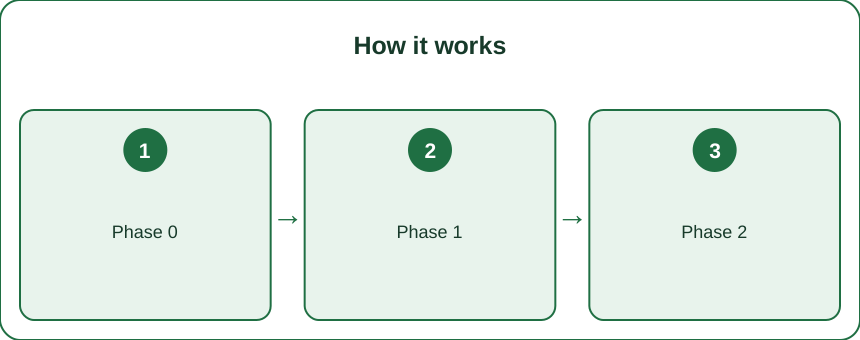
Quick Answer: A safe return to strength training after birth moves through four phases over roughly 12 weeks: breath and deep core reconnection, bodyweight movement patterns, external load, then progressive loading. The gate between phases isn’t the calendar - it’s whether you can perform the current phase without leaking, doming, or pelvic heaviness. Most people who run into problems skipped a phase, not a week.
The standard advice - wait six weeks, then you’re cleared - describes a medical checkpoint, not a training plan. Here is the plan that fills the gap.
Phase 0 (weeks 0-6): what is actually happening in your body
Understanding this phase changes how you approach every phase after it.
The abdominal wall is remodelling. The linea alba - the connective tissue running down the midline between the abdominal muscles - stretched substantially during pregnancy and is now recovering its stiffness. Some degree of separation between the rectus muscles is present in essentially everyone at birth and continues to resolve over months. What matters clinically is less the width of the gap and more whether the tissue can generate tension.
The pelvic floor has undergone significant load. This is true after both vaginal and caesarean birth, because nine months of pregnancy loads the pelvic floor regardless of delivery route. Caesarean birth adds abdominal surgical recovery on top.
Hormonal changes affect connective tissue. Relaxin and related changes persist for some months, and for people who are breastfeeding, the hormonal environment differs further. Joints may feel less stable than they did, and this is a real physiological effect rather than imagination.
What to do in this window: walking as tolerated, diaphragmatic breathing, and gentle reconnection work if a clinician has cleared it. Not nothing - but not loaded training.
The six-week appointment is a screening visit, not a training clearance. It generally checks healing and rules out complications. It does not assess whether your deep core system coordinates under load, and asking for a referral to a pelvic health physiotherapist is a reasonable and increasingly standard request. In some countries that referral is routine; in others you have to ask for it. Ask.
Phase 1 (weeks 1-3 of training): breath, pressure, and reconnection
This phase looks like almost nothing is happening. It is the phase that determines whether the other three work.
The core system is a pressure system. Diaphragm above, pelvic floor below, deep abdominals around. When you lift, intra-abdominal pressure rises, and that pressure has to be managed by all four surfaces coordinating. After birth, the coordination - not just the strength - is what’s disrupted.
The foundational drill: lying on your back, knees bent. Inhale, letting the ribcage expand sideways and the pelvic floor gently relax and descend. Exhale slowly, feeling a gentle lift through the pelvic floor and a soft drawing-in of the lower abdomen. The exhale precedes the effort. Ten breaths, two or three times a day.
Progress it in three steps: the same breathing lying down, then seated, then standing. Standing is meaningfully harder because gravity is now loading the system.
Add gentle patterns once breathing is coordinated: heel slides, bent-knee falling-out, glute bridges. All performed with the exhale on the effort.
What you’re checking for throughout: no doming or coning along the midline of your abdomen, no leaking, no dragging or heaviness in the pelvis. Any of those means the drill is currently too demanding - regress it rather than pushing through.
Typical duration is 2-3 weeks, but this is entirely individual. Some people need considerably longer, and there is nothing wrong with that.
Phase 2 (weeks 4-6): bodyweight patterns and load management
Now you rebuild the movement patterns themselves, unloaded, with the breathing you established in phase one carried into every rep.
The five patterns worth rebuilding: squat, hinge, push, pull, and carry. That’s the whole vocabulary of strength training, and each one needs to work at bodyweight before it works with load.
Squat: box squat to a chair, controlled descent, exhale as you stand. Depth is determined by where you can maintain control, not by what you could do before.
Hinge: hip hinge to a wall or with a dowel along the spine, feeling the hamstrings load. This is the pattern most people lose most completely and rebuild most slowly.
Push: incline push-up against a wall or counter, progressing the angle down over weeks. Floor push-ups are a later-phase movement.
Pull: band rows, seated or standing. Postural demands after birth - carrying, feeding, lifting a car seat - are heavily pulling-deficient, and this pattern pays back quickly.
Carry: a suitcase carry with a light weight in one hand, walking 20-30 metres with ribs stacked over pelvis. Carries are underrated here because they train the whole pressure system in an upright, functional position.
Volume guidance: two or three sessions a week, two sets of 8-12 per pattern, and finish every session feeling like you could have done more. The single most common error in this phase is treating a good day as permission to jump two phases ahead.
Phase 3 (weeks 7-9): adding external load
External load enters only after bodyweight patterns are clean and symptom-free for at least a week of consistent training.
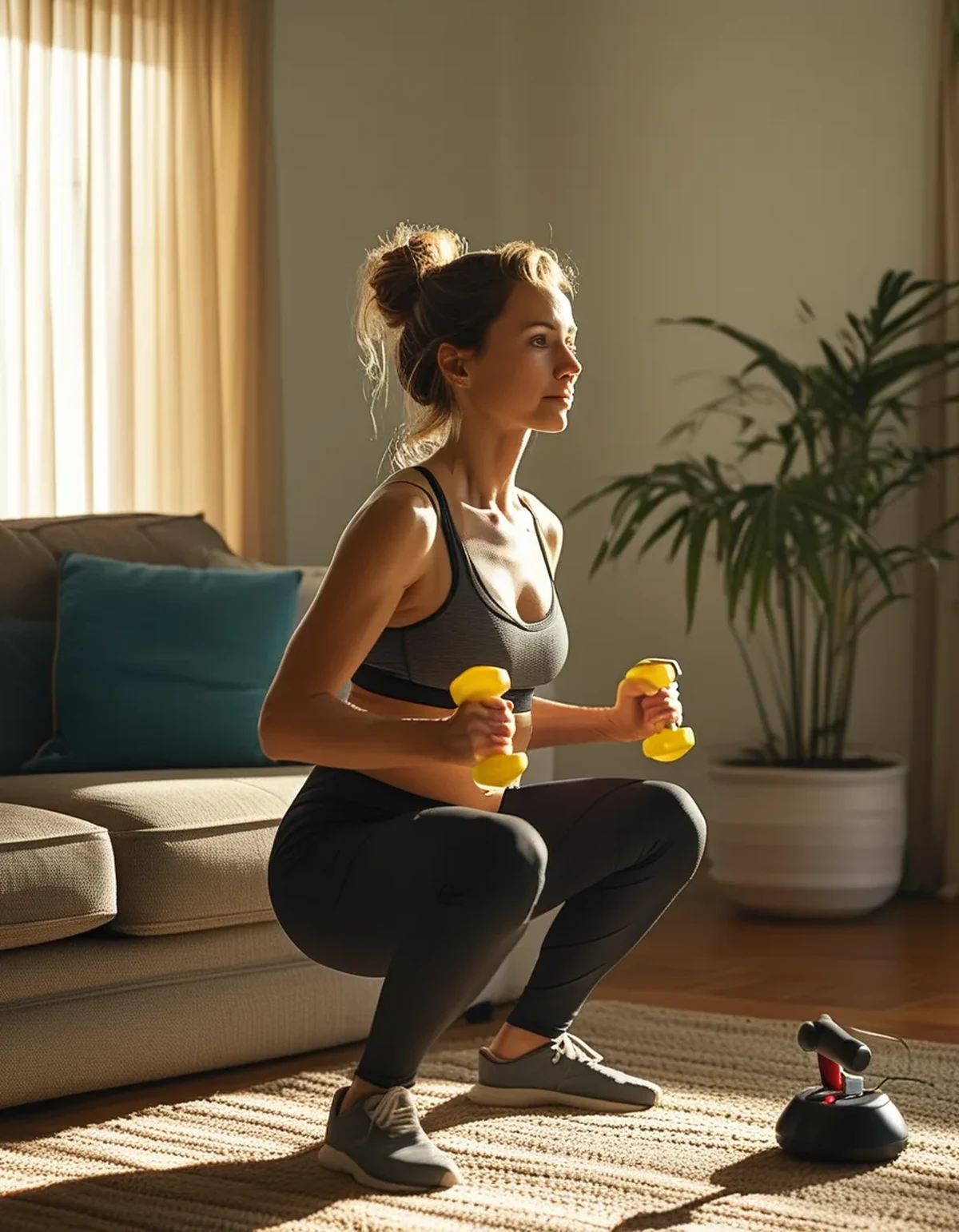
Start absurdly light. Lighter than your ego wants, lighter than what you used pre-pregnancy, lighter than what feels like training. A pair of 4-6kg dumbbells covers most of this phase for most people. The goal is to see how the pressure system handles load, not to challenge the muscles.
The rule for every set: exhale on exertion. Breath-holding under load - the Valsalva manoeuvre - is a legitimate advanced lifting technique and it dramatically increases intra-abdominal pressure. That’s precisely what a recovering system doesn’t need yet. Breath-holding comes back much later, if at all, and ideally with professional guidance.
Progress one variable at a time. Add weight, or add reps, or add sets - never two in the same week. This is generally good practice and specifically important here, because it tells you exactly what caused a symptom if one appears.
Weekly self-check before progressing:
- No leaking during or after the session, including on the walk home
- No pelvic heaviness, dragging, or bulging sensation
- No doming along the midline during effort
- No low back or pelvic pain that persists into the next day
- You can maintain your breathing pattern for every rep
All five clear? Add load. Any one unclear? Hold at the current level for another week. If something is unclear for more than two weeks running, that’s a pelvic health physiotherapist conversation.
Phase 4 (weeks 10-12 and beyond): progressive loading and impact
This is where training starts to look like training again, and where the timeline stops being useful as a guide.
Progressive overload resumes properly. Add small increments weekly, keep the exhale-on-exertion pattern, and continue the weekly self-check indefinitely. Many people find the check becomes automatic and takes no thought at all.
Impact is its own separate decision. Running, jumping, and plyometrics load the pelvic floor with forces several times body weight and are commonly recommended to wait until at least 12 weeks postpartum, with a graded return after that - and with the same symptom checks applied. Return-to-running guidance from pelvic health physiotherapy consistently recommends a load-testing progression (single-leg hops, jogging on the spot, short intervals) before continuous running rather than jumping straight back.
Overhead pressing and heavy hinging are the two patterns most likely to reveal a pressure management gap. Introduce them last and conservatively.
Realistic timelines are longer than the internet suggests. Full return to previous loads commonly takes six months to a year, and for people who are breastfeeding, sleep-deprived, or managing a caesarean recovery, longer still. None of that is a failure of effort. Recovery timelines after birth vary enormously between individuals, and comparing yours to someone else’s is genuinely useless information.
If you had a caesarean birth, add a scar-specific consideration: scar tissue mobility affects abdominal function, and scar massage guidance from a professional is worth seeking once healing is complete.
What Nobody Tells You About the Postpartum Return
Sleep deprivation changes what your body can absorb. Training adaptation happens during sleep. A body running on fragmented four-hour nights recovers more slowly from the same session, and the honest adjustment is less volume rather than more discipline. This is temporary and it’s real.
Leaking is common and it is not something you have to accept permanently. A large proportion of postpartum women experience some urinary leaking with exertion. Common does not mean untreatable - pelvic floor physiotherapy has strong evidence behind it, and the outcomes are generally good. The reason to mention it is that many people never raise it because they assume it’s the price of having had a baby.
The abdominal gap is less important than the tension. Public conversation focuses almost entirely on how many fingers wide a separation is. Clinically, whether the tissue can generate tension under load matters more than the measurement, and gaps that persist can still function well.
Second and subsequent babies are not the same as the first. Recovery patterns differ, often meaningfully, and assuming your first recovery predicts your second sets up an unnecessary disappointment.
Feeding position affects your training posture. Hours a day in a rounded, forward posture makes pulling patterns and thoracic mobility work disproportionately valuable. This is why the pull pattern in phase two often produces the fastest subjective improvement.
And the piece that matters most: the plan that works is the one that fits a day with a newborn in it. Two twenty-minute sessions a week, done consistently for three months, beats a four-day programme abandoned in week two.
FAQ: Postpartum Strength Training Questions, Answered
Can I start this if I’m more than a year postpartum?
Yes. The phases are a progression, not a calendar tied to birth. If you never did phases one and two, starting there is worthwhile at any point - including years later.
Does a caesarean birth change the plan?
The phases are the same, but the timeline typically starts later and abdominal loading progresses more cautiously. Surgical recovery is its own process, and specific clearance from your care provider matters more here.
What if I was very fit before pregnancy?
Prior fitness helps with movement quality and confidence, and it does not shortcut connective tissue and pelvic floor recovery. Highly trained people are actually more likely to skip phases, because bodyweight work feels insultingly easy.
Is it normal to feel weaker than expected?
Yes, and it usually improves faster than people fear once loading resumes. Strength returns considerably quicker than it was originally built.
When should I stop and see someone?
Leaking, pelvic heaviness or bulging, persistent pain, or doming that doesn’t resolve with regression are all reasons to see a pelvic health physiotherapist. This is general information, not medical advice, and an individual assessment is worth far more than any general article.
TL;DR:
- Four phases: breath and reconnection, bodyweight patterns, light external load, progressive loading
- The gate between phases is symptom-free performance, not the calendar
- Exhale on exertion, always; breath-holding under load comes much later if at all
- Weekly check: no leaking, no heaviness, no doming, no lingering pain, breathing maintained
- Impact work waits until at least 12 weeks and needs its own graded progression
- Ask for a pelvic health physiotherapy referral - the six-week appointment doesn’t assess this
The people who return well aren’t the ones who started fastest. They’re the ones who never had to go back a phase.
See It in Motion
Seen here: Maternity Capris with Side Pockets — shop it on bubblelime.com
Keep Reading
This article is for general informational and styling purposes only. Fit, sizing, and product availability may vary.