The Forgotten Postpartum Window: Rebuilding Strength at 12 to 18 Months

Quick Answer: At 12 to 18 months postpartum you are not in recovery anymore - you are in training, and you should be programmed like any other adult with a specific history. Start with a four-week rebuild of core and pelvic floor coordination under load, then run a genuine progressive strength program: two to three full-body sessions a week, compound lifts, 6 to 10 reps, adding load weekly. The obstacles at this stage are almost never the abdominal wall; they are sleep debt, under-eating, chronic asymmetric carrying, and a plan built for week six that you never graduated from.
The internet has an enormous amount to say about the first twelve weeks and almost nothing to say about month fourteen. Meanwhile the body at month fourteen is largely healed, meaningfully deconditioned, carrying a 25-pound toddler on one hip, and being handed the same breathing exercises it was given the week after birth.

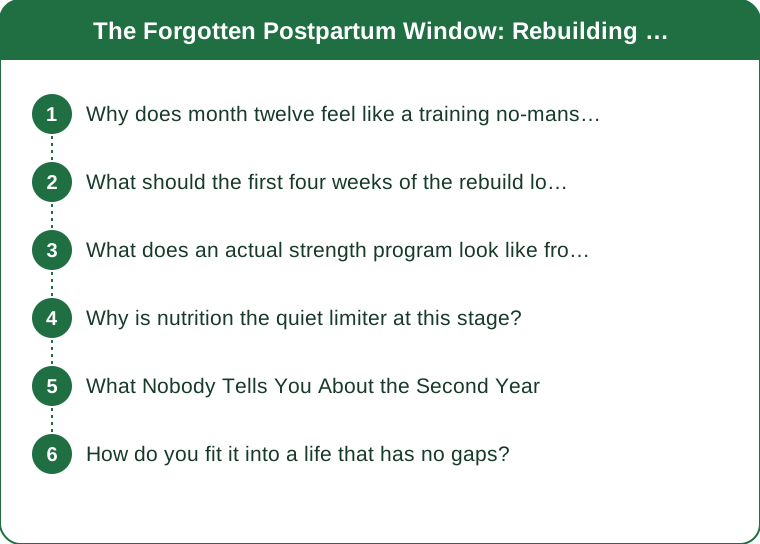
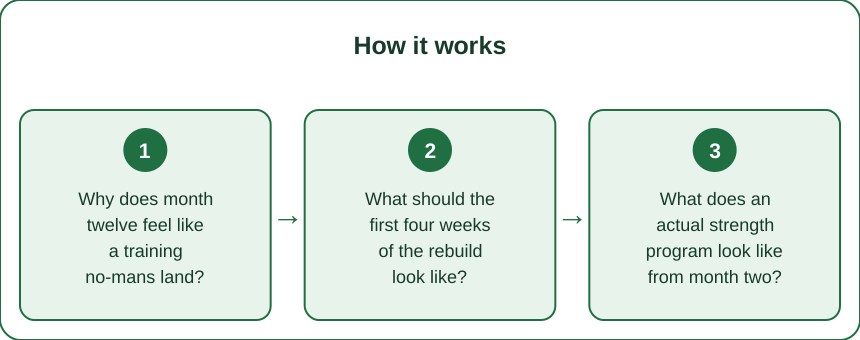
Why does month twelve feel like a training no-mans land?
Because the recovery framing expires and nothing replaces it. Postpartum content is organized around healing - tissue, scar, pelvic floor, diastasis - and by the year mark the healing questions are mostly answered. What replaces them should be a strength program, but the search results keep serving week-six content, so plenty of women are still doing modified glute bridges eighteen months in.
The deconditioning is real and it is not pathology. A year of interrupted sleep, limited training time, and cautious movement produces exactly what a year of that produces in any adult: less muscle, less capacity, less confidence. That is a training problem with a training solution, and it responds to load like anyone else.
The daily loading is wildly asymmetric. Carrying a toddler on one hip, lifting from a crib with a twisted spine, hauling a car seat single-handed, feeding in the same position for months - this is a heavy, one-sided training program you did not choose. Most of the aches at this stage trace back to it, and the fix is deliberate symmetrical strength, not more rest.
Confidence lags capacity by months. Women at fourteen months routinely believe they are fragile long after the tissue evidence says otherwise, because the last authoritative message they received was be careful. Nobody sends the follow-up message saying you can pick up something heavy now.
And the clinical picture at this point deserves an actual check. If leaking, heaviness, pain with intercourse, or a doming abdominal wall persist at the year mark, those are not things to train through or wait out - they are specific, treatable issues, and a pelvic health physiotherapist is the correct next call rather than a harder program.
What should the first four weeks of the rebuild look like?
Not a return to week six - a bridge from where you are to real training.
Week one: reassess honestly. Check the abdominal wall for doming and for the gap and, more importantly, for tension - a flat, tensioned wall matters far more than millimeters of separation. Test a few basics: a bodyweight squat, a hip hinge with a light weight, a farmer carry for 30 seconds, a dead bug for ten controlled reps. Note where control fails, not where it hurts.
Weeks one to two: reconnect breathing to load, not to rest. The exhale-on-effort pattern is the whole point of postpartum core work, and it is meant to be applied to lifting, not practiced forever on the floor. Exhale as you stand from the squat, as you press, as you rise from the hinge. Twenty minutes of dedicated breathing drills is less useful than applying the pattern to twelve working sets.
Weeks two to three: add loaded carries. Suitcase carries in particular directly counter a year of one-sided toddler hauling, and they build the deep trunk stability that transfers to everything else. Two sets per side, 30 to 40 seconds, moderate weight, ribs down.
Weeks three to four: introduce the compound patterns with real load. Goblet squat, dumbbell Romanian deadlift, incline press, row, split squat. Sets of 8 to 10, weight that leaves two reps in reserve, form checked in a mirror or on video.
Throughout: watch for the two signals that mean scale back. Doming or coning along the midline under load, and any leaking or heaviness. Both are information about pressure management, usually correctable by exhaling on effort, reducing the load a notch, or narrowing the range - and both warrant a pelvic health assessment if they persist.
What does an actual strength program look like from month two?
This is where most postpartum content stops and where the results start.
Frequency: two to three full-body sessions per week. Full-body beats split routines here because sessions get cancelled by illness, teething, and daycare germs - if you miss a day of a four-day split you have missed a whole muscle group; if you miss one of three full-body days, you have missed a third of the volume.
Structure: one lower push, one lower hinge, one upper push, one upper pull, one carry or core, per session. Roughly 45 minutes. That is a complete program, and it fits inside a nap.
Load and reps: 6 to 10 reps, two to three sets, adding weight when you finish all sets with two reps left in the tank. Progressive overload is the mechanism. Doing the same three-pound dumbbells for eight months is the single most common reason women report that nothing is changing.
Progression rate: expect real strength gains for six to twelve months. Detrained adults rebuild quickly, and a year postpartum with limited training is a strongly detrained state - which is genuinely good news. Many women find their working weights in month six exceed anything they lifted before pregnancy.
Impact and running: build the base first. If returning to running, the standard guidance is a progressive strength and impact-tolerance base before mileage, with a check on any leaking under load. Twelve months does not automatically qualify you; twelve months plus twelve weeks of consistent lower-body strength usually does.
Recovery: two full rest days, and treat sleep as programming. On genuinely broken-sleep weeks, cut volume by a third rather than skipping entirely. Consistency at reduced volume beats an all-or-nothing pattern by a wide margin over a year.

Why is nutrition the quiet limiter at this stage?
Because a year of under-eating is extremely common and almost never named. Between breastfeeding, distracted meals, and a culture that treats postpartum eating as something to minimize, many women arrive at month twelve chronically under-fueled - and no strength program works on top of that.
Protein is the specific gap. Rebuilding muscle needs meaningfully more than the standard minimum, and toddler-parent eating patterns - grazing on leftovers, coffee for breakfast - reliably undershoot it. Anchoring protein to three actual meals is the intervention, not a shake bolted onto the same day.
Still breastfeeding at twelve months changes the arithmetic. Milk production continues to carry an energy cost, and combining it with training and a deficit is the reliable route to stalled progress, worse sleep, and injury. If you are still nursing and training seriously, this is not the season for aggressive restriction.
Iron deserves a check. Postpartum iron depletion is common, often persists longer than expected, and presents exactly as being unable to train hard - breathlessness, fatigue, poor recovery. It is a simple blood test, and it explains a meaningful share of the I am still exhausted at fourteen months reports.
Hydration is the boring one that matters. Especially while nursing, and especially given how easy it is to reach 3pm having drunk one cold coffee.
And calories set the ceiling on everything above. Strength training in a deficit at twelve months postpartum, on interrupted sleep, is asking one body to do three hard jobs at once. Building first and reshaping later is the sequencing that actually works.
This is general information, not medical advice. Persistent fatigue, leaking, pelvic pain, or heaviness should be assessed by a healthcare professional or pelvic health physiotherapist.
What Nobody Tells You About the Second Year
Your abdominal wall is probably fine, and your hips are probably not. By month twelve, the vast majority of diastasis has resolved to a functional level. The complaints that persist are far more often hip, glute, and mid-back issues from asymmetric carrying - and they respond to single-leg work and carries, not to more core rehab.
Strength returns faster than you expect and confidence returns slower. Women at this stage routinely discover they can deadlift more than they assumed within eight weeks. The mental adjustment - permitting yourself to load a bar again - takes longer than the physical one.
The pelvic floor can be too tight, not just too weak. A year of bracing, guarding, and constant kegels can produce an overactive pelvic floor that presents with the same symptoms as weakness. If kegels are making symptoms worse, that is a strong signal to see a pelvic health physio rather than to do more of them.
Training with a toddler present is a skill, not a compromise. Sessions get interrupted; the successful pattern is short, repeatable, and interruptible - three sets you can abandon and resume beats a 90-minute plan that never happens.
Nobody will tell you that you are cleared to train hard. The six-week appointment was the last official checkpoint most women get. In the absence of a green light, most people keep waiting - which is why this window gets lost. Consider this the notification.
And the second year is when the identity shifts back. The first year is survival and healing; the second is where training becomes yours again rather than a rehabilitation project. That change is worth naming, because a lot of women are waiting for permission that no appointment is going to deliver.
How do you fit it into a life that has no gaps?
Three 45-minute sessions is the target; two 30-minute sessions is a real program. The failure mode is not doing too little - it is designing for a schedule you do not have and then doing nothing.
Anchor sessions to fixed points in the week. Naps are unreliable; daycare drop-off, a partner’s fixed evening, or a standing Saturday morning are not. A session attached to an existing anchor survives far longer than one that depends on finding time.
Keep the equipment out. A single pair of adjustable dumbbells left in the corner of a room removes the largest barrier at this stage, which is setup time. Gear in a closet is gear you will use twice.
Build the interruptible session. Five exercises, each self-contained, done in any order. If the toddler needs you after exercise three, you completed three-fifths of a workout - not a failure.
Use a written plan you do not have to think about. Decision-making is the scarcest resource in a house with a one-year-old. Same five movements, written on paper, with last week’s weights recorded next to them.
Expect a six-week ramp before it feels normal. The first fortnight is soreness and logistics, weeks three and four are when the routine stabilizes, and by week six it is a fixture. Almost everyone who quits does so before week three.
And go easier on the plan than on the consistency. A mediocre program done twice a week for eight months will transform how you feel at eighteen months postpartum. The perfect program done for two weeks will not.
TL;DR:
- At 12 to 18 months you are training, not recovering - the plan should be a real progressive strength program, not week-six rehab repeated indefinitely.
- Spend four weeks bridging: reassess, apply exhale-on-effort to loaded movement, add suitcase carries to counter one-sided toddler hauling, then load the compound patterns.
- Run two to three full-body sessions weekly, 6 to 10 reps, adding weight when you finish sets with two reps in reserve; expect months of steady gains from a detrained baseline.
- The quiet limiters are under-eating, low protein, possible iron depletion, and sleep debt - not your abdominal wall.
- Persistent leaking, heaviness, pain, or doming means a pelvic health physiotherapist, not a harder program - and an overactive pelvic floor can mimic a weak one.
Nobody is going to call and tell you that you are cleared to train hard. The six-week appointment was the last checkpoint most women get, and the window it opened has been standing open for a year - so pick up something heavy, write down what you lifted, and add a little next week.
See It in Motion
Seen here: Maternity Capris with Side Pockets — shop it on bubblelime.com
Keep Reading
This article is for general informational and styling purposes only. Fit, sizing, and product availability may vary.