When Can You Actually Return to Running Postpartum? A Realistic Timeline

Quick Answer: Most postpartum guidelines suggest a graduated return starting with walking and pelvic floor/core work in the first 6 weeks, progressing to a structured run-walk program around 3-4 months postpartum — not jumping straight into running once you get standard medical clearance at 6 weeks.
Your 6-week checkup cleared you for ‘exercise,’ and you assume that means lacing up for a run. That clearance is a general green light, not a running-specific one — running is a high-impact activity your pelvic floor and core need more graduated prep for.

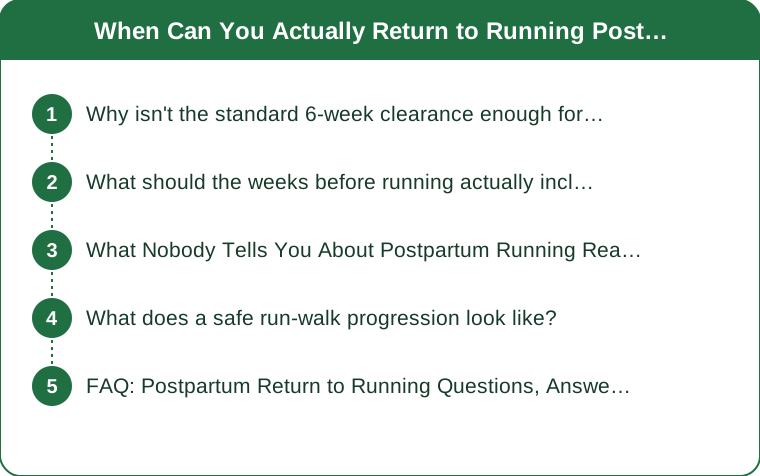
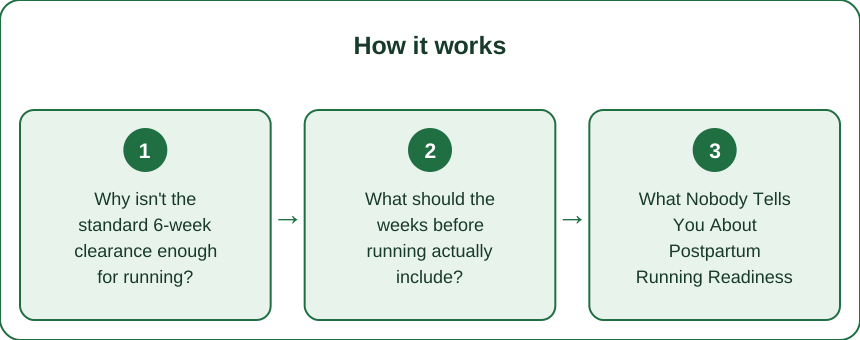
Why isn’t the standard 6-week clearance enough for running?
Because that checkup screens for general healing — incision or tear recovery, bleeding — not for the pelvic floor strength and core function that running specifically demands.
Running involves repeated impact forces roughly 2-3x bodyweight per stride. A pelvic floor still rebuilding strength and coordination after pregnancy and delivery often isn’t ready to absorb that load at 6 weeks, even when general healing looks complete. This is part of why postpartum-specific rehab (sometimes with a pelvic floor physical therapist) increasingly precedes a running return in updated guidelines.
What should the weeks before running actually include?
Weeks 0-6: gentle walking, breathing and gentle pelvic floor engagement work, cleared by your provider. Weeks 6-12: progressive walking, bodyweight strength focused on core and glutes, pelvic floor-specific exercises — ideally with a pelvic floor PT assessment if available. Weeks 12-16+: if strength markers are met (see below), a structured run-walk program, not straight into continuous running.
This timeline is a general framework — individual recovery, especially after a C-section or complicated delivery, may need more time at any stage.

What Nobody Tells You About Postpartum Running Readiness
There are specific readiness checks increasingly recommended before returning to running, beyond just ‘time since birth’:
- Can you do a single-leg bridge with good control, 10+ reps each side, without pain or leaking?
- Can you jump rope or hop in place for 1 minute without any leaking or pelvic heaviness?
- Can you walk briskly for 30 minutes without pelvic discomfort or excessive fatigue?
If any of these aren’t clean yet, more foundational work — not more waiting alone — is usually what closes the gap, and a pelvic floor PT can pinpoint exactly what’s missing faster than guesswork.
What does a safe run-walk progression look like?
A common structured approach: alternate 1 minute running / 1 minute walking for 20-30 minutes total, 2-3 times a week, only progressing the running interval once a full session feels comfortable with zero leaking, heaviness, or pain.
Stop and scale back — don’t push through — if you notice any pelvic pressure, leaking, or lower back pain during a session. Progression should be based on how your body responds, not a fixed calendar date.
FAQ: Postpartum Return to Running Questions, Answered
Is 6 weeks postpartum too early to run?
For most people, yes — general medical clearance at 6 weeks isn’t the same as pelvic floor readiness for running’s impact demands; a more graduated approach is increasingly recommended.
Do I need a pelvic floor physical therapist to return to running safely?
Not strictly required, but increasingly recommended, especially after a difficult delivery, C-section, or if you notice any leaking or heaviness during activity — they can assess readiness far more precisely than a general timeline.
What if I feel fine but haven’t hit all the readiness checks?
Feeling fine and being structurally ready aren’t always the same thing — symptoms like leaking can be subtle or only appear under real running load, which is exactly why the specific checks matter more than how you feel walking around.
TL;DR:
- Standard 6-week clearance covers general healing, not running-specific pelvic floor readiness
- A graduated path (walking → strength/pelvic floor work → run-walk program) is safer than jumping straight in
- Readiness checks (single-leg bridge, hopping, 30-min brisk walk) matter more than a fixed calendar date
- Stop and scale back at any sign of leaking, heaviness, or pain rather than pushing through
This is general information, not medical advice — a pelvic floor PT can give you a personalized, much more precise timeline.
See It in Motion
Seen here: Maternity Capris with Side Pockets — shop it on bubblelime.com
Keep Reading
This article is for general informational and styling purposes only. Fit, sizing, and product availability may vary.