The Complete Postpartum Return-to-Running Timeline, Week by Week

Quick Answer: Most postpartum bodies need a structured 12-16 week progression from walking to jogging intervals to full running — not a single green light at 6 weeks. Pelvic floor and core readiness matter more than the calendar date.
The 6-week postpartum checkup often ends with “you’re cleared for exercise,” and a lot of people hear that as “cleared to run.” It isn’t quite the same thing. Running is a high-impact, single-leg-loading activity, and most pelvic floors and cores need real progressive loading before they’re ready for it — rushing this stage is the single most common cause of postpartum running setbacks like leaking, pelvic heaviness, or diastasis flare-ups.

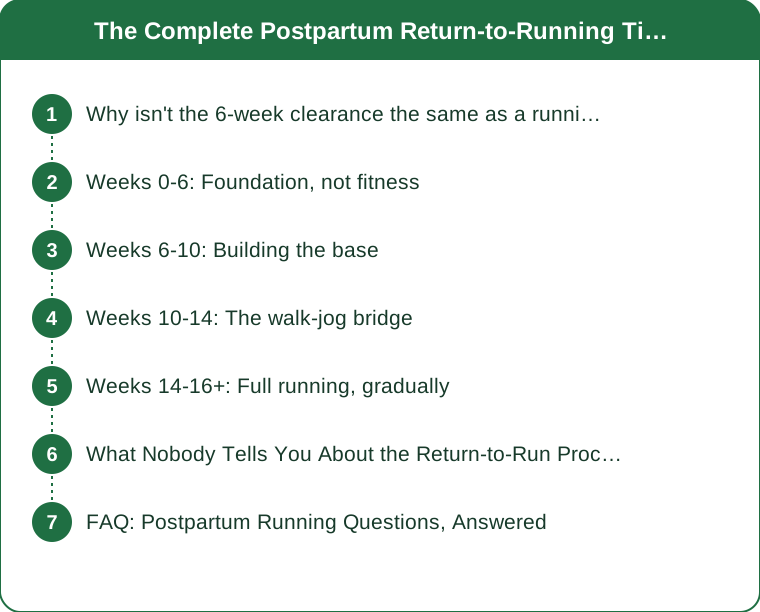
Why isn’t the 6-week clearance the same as a running clearance?
The standard 6-week postpartum checkup screens for major medical complications — healing of tears or incisions, uterine involution, blood pressure — not for the specific strength and control running demands. Running requires your pelvic floor to absorb roughly 1.5-3 times your bodyweight in impact force per stride, and most pelvic floors 6 weeks postpartum simply haven’t rebuilt that capacity yet, regardless of how the checkup went.
This is why so many people who felt “cleared” at 6 weeks develop leaking or heaviness symptoms once they actually start running at 8 or 10 weeks — the checkup and the readiness are two different questions. A better framework is a structured return, ideally guided by a pelvic floor physical therapist, that builds capacity in stages rather than testing it against pavement on day one.
Weeks 0-6: Foundation, not fitness
This phase is about healing, not training. Focus on breathing mechanics (diaphragmatic breathing reconnects the core and pelvic floor as a team), gentle walking building from 10 to 20-30 minutes, and pelvic floor awareness — not necessarily kegels for everyone, since some postpartum pelvic floors are actually overactive rather than weak, which is exactly why a professional assessment matters more than a generic exercise list.
Signs you’re not ready to progress past this phase: any leaking during daily activity, visible bulging at the abdominal midline, or a feeling of heaviness or pressure in the pelvis. These aren’t failures — they’re information telling you to stay here longer.
Weeks 6-10: Building the base
If cleared and symptom-free, this phase adds bodyweight strength — squats, glute bridges, bird-dogs, and modified planks, 2-3 times a week. Walking extends toward 30-45 minutes, potentially adding gentle inclines. The goal is loading your core and pelvic floor progressively under control, which is a very different demand than running’s repeated impact.
A useful readiness check before moving forward: can you do 10 single-leg glute bridges per side, hold a 30-second modified plank, and walk briskly for 30 minutes — all without any leaking, heaviness, or bulging? If yes, you’re generally ready for the next stage.

Weeks 10-14: The walk-jog bridge
This is where actual running mechanics get reintroduced, gradually. A typical progression: Week 10-11, 1 minute jog / 2 minutes walk, repeated 5-6 times. Week 12, 2 minutes jog / 2 minutes walk, 6-8 rounds. Week 13-14, 3-4 minutes jog / 1-2 minutes walk, extending jog intervals as tolerated.
Every session, check in immediately after and the following morning: any leaking, pelvic pressure, or low back pain means dropping back one stage, not pushing through. This bridge phase is the single most skipped step in most postpartum return-to-run plans, and skipping it is the most common reason people get 2 weeks into “real” running and suddenly hit a wall of symptoms.
Weeks 14-16+: Full running, gradually
Once you can jog continuously for 10 minutes symptom-free, extend by roughly 10% per week rather than jumping straight back to a pre-pregnancy mileage or pace. Reintroduce speed work, hills, and longer distances last, in that order, spaced weeks apart rather than all at once.
A realistic marker: most people reach a comfortable continuous 20-30 minute run somewhere between week 14 and week 20, with wide individual variation depending on birth type, prior fitness, and how consistently the earlier phases were followed.
What Nobody Tells You About the Return-to-Run Process
Nobody mentions that a C-section birth often needs more time in the foundation phase, not less — the abdominal wall was surgically opened, and scar tissue mobility (gently, once healed) is part of readiness that vaginal births don’t need to consider in the same way.
Nobody mentions that breastfeeding hormones can affect joint laxity and pelvic floor tone for months, which is part of why some people’s timelines run longer than a fitness-app template suggests. And almost nobody mentions that symptoms can appear weeks after a run, not during it — checking in only mid-run misses this delayed pattern entirely.
FAQ: Postpartum Running Questions, Answered
When can I start running after a vaginal birth?
There’s no single safe date — readiness depends on symptom-free strength markers (described in the weeks 6-10 section above), typically reached somewhere between weeks 8-12, not a fixed calendar number.
When can I start running after a C-section?
Generally later than vaginal birth, often not before 10-12 weeks at the earliest, and only after incision healing is confirmed and gentle scar mobilization has begun. This is highly individual — a pelvic floor PT assessment is strongly recommended before starting.
What does leaking during a postpartum run actually mean?
It means your pelvic floor isn’t yet managing the impact load of that intensity or duration — it’s a signal to drop back a stage, not something to push through or accept as permanent. Most cases improve significantly with a structured, gradual progression and, when needed, pelvic floor physical therapy. This is general information, not medical advice — a pelvic floor physical therapist can build a return-to-run plan specific to your birth and body.
TL;DR:
- The 6-week clearance is a medical check, not a running clearance
- Weeks 0-6: breathing, walking, awareness — no running
- Weeks 6-10: bodyweight strength builds the base
- Weeks 10-14: walk-jog intervals are the most-skipped, most-important bridge
- Weeks 14-16+: extend running by about 10% a week, symptom-free
- Any leaking, heaviness, or bulging means dropping back a stage, not pushing through
This is general information, not medical advice — a pelvic floor physical therapist can personalize this timeline to your specific birth and recovery.
See It in Motion
Seen here: Maternity Capris with Side Pockets — shop it on bubblelime.com
Keep Reading
This article is for general informational and styling purposes only. Fit, sizing, and product availability may vary.