The Postpartum Return-to-Exercise Timeline Nobody Actually Explains

Quick Answer: The ‘6-week clearance’ most people hear is a minimum safety checkpoint, not a green light for your pre-pregnancy workout. A realistic return runs in four overlapping phases across roughly 3-6 months, built around healing signs your body shows you, not the calendar.
You got cleared at your 6-week checkup, so why does a light jog still feel wrong? Why does something feel off during a simple sit-up? The answer is that ‘cleared’ means no medical red flags — it was never meant to mean ‘ready for your old routine.’

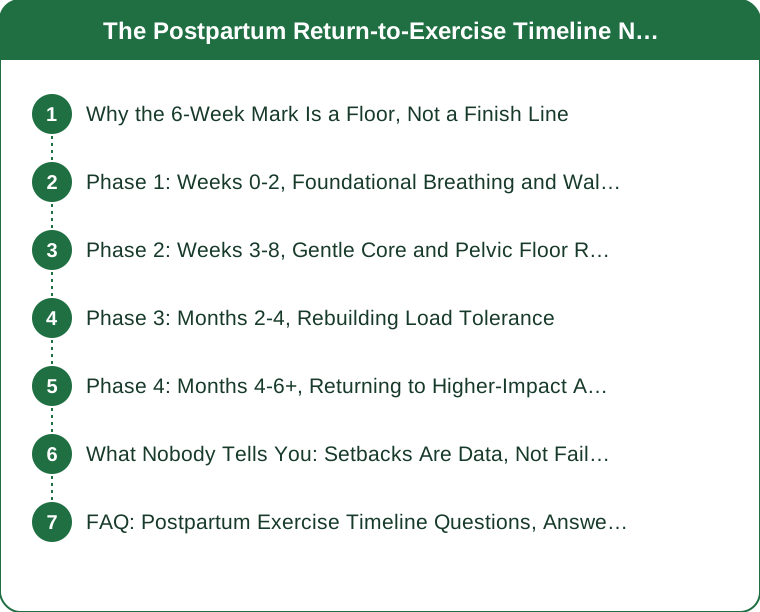
Why the 6-Week Mark Is a Floor, Not a Finish Line
The standard postpartum checkup at 6 weeks checks for major complications — infection, abnormal bleeding, incision healing for C-sections. It does not assess pelvic floor strength, core function, or diastasis recti recovery, which are the things that actually determine whether your body is ready for impact or heavy loading.
This gap is why so many people who felt ‘cleared’ end up with leaking, back pain, or a bulging midline weeks into a return to running — they were medically cleared, but not functionally assessed. A pelvic floor physical therapist can do that functional assessment, and it’s worth seeking out even where it’s not automatically offered.
Phase 1: Weeks 0-2, Foundational Breathing and Walking
In the first two weeks, the goal isn’t fitness at all — it’s reconnecting to your diaphragm and pelvic floor through breathing. Practice 360-degree breathing: inhale and let your ribs expand in all directions, exhale with a gentle pelvic floor lift. Add short, slow walks as energy allows, stopping well before fatigue.
This phase feels almost too easy for anyone used to structured workouts, but skipping it is the single most common reason people hit setbacks later. The deep core and pelvic floor need to re-learn coordination before they can handle load, and that relearning happens through breath, not exercise.
Phase 2: Weeks 3-8, Gentle Core and Pelvic Floor Reconnection
Once bleeding has stopped and basic daily movement feels comfortable, add gentle activation work: seated pelvic tilts, heel slides, and bridge holds without weight. Watch for coning or bulging along the midline during any exercise — that’s a sign of diastasis recti not yet ready for the load, and it’s a stop signal, not something to push through.
Walking distance can gradually increase in this phase, and light bodyweight movement (modified squats, wall pushes) is usually appropriate by week 6-8 if healing is on track. This is also the window where a pelvic floor PT assessment is most valuable, since it can catch problems before they show up as pain.

Phase 3: Months 2-4, Rebuilding Load Tolerance
This is where structured strength work resumes — but progressively. Start with bodyweight and light resistance band work, focusing on exhaling on exertion to manage intra-abdominal pressure, and progress load only when the previous level produces zero leaking, bulging, or pain.
Running and jumping generally aren’t recommended until this phase is well underway and a functional readiness test (single-leg hop, plank hold without coning, ability to run in place for a minute symptom-free) has been passed — usually not before month 3, and later for C-section recovery or more significant diastasis.
Phase 4: Months 4-6+, Returning to Higher-Impact Activity
Impact activities — running, jumping, heavier lifting — are the last things to return, not the first, because they place the highest demand on a pelvic floor and core system that’s still remodeling tissue. A graded return (walk-run intervals, gradually increasing distance) works far better than jumping back into a pre-pregnancy running plan at pre-pregnancy pace.
Many people find their timeline extends beyond 6 months, especially with C-section recovery, breastfeeding-related joint laxity, or a more significant diastasis — and that’s within a normal range, not a failure to ‘bounce back’ on schedule.
What Nobody Tells You: Setbacks Are Data, Not Failure
If you push into a new phase and notice leaking, bulging, or pain, that’s not proof you’re broken — it’s your body telling you the previous phase needs another week or two of consolidation before adding more. Treating a setback as information rather than a personal failure is one of the biggest mindset shifts that makes this process sustainable rather than demoralizing.
Hormonal changes from breastfeeding also affect joint stability for months, which is a real physiological reason (not just deconditioning) that balance and impact-heavy movements can feel different than expected even when strength has returned.
FAQ: Postpartum Exercise Timeline Questions, Answered
Is it normal to still feel ‘not ready’ for running at 6 months?
Yes — timelines vary widely based on birth type, diastasis severity, and individual healing, and 6-12 months for full impact-readiness is common and normal.
Do I need a pelvic floor PT if I feel fine?
A baseline assessment is worth it even without symptoms, since some issues (mild diastasis, subtle pelvic floor weakness) don’t cause noticeable symptoms until load increases later.
What’s the single biggest red flag to stop and reassess?
Any leaking, visible midline bulging/coning, or pelvic heaviness/pressure during an exercise means that exercise is ahead of your current readiness — back off and consolidate rather than pushing through.
This is general information, not medical advice — work with your OB, midwife, or a pelvic floor physical therapist for guidance specific to your birth and recovery.
TL;DR:
- The 6-week checkup clears you medically, not functionally — get a pelvic floor assessment if possible
- Phase 1 (weeks 0-2): breathing and short walks only
- Phase 2 (weeks 3-8): gentle core reconnection, watch for coning/bulging
- Phase 3 (months 2-4): progressive strength, exhale on exertion
- Phase 4 (months 4-6+): impact and running return last, gradually
A slower, phase-based return isn’t a lesser path — it’s the version that actually holds up long-term, instead of trading a faster comeback for a setback six months down the line.
See It in Motion
Seen here: Maternity Capris with Side Pockets — shop it on bubblelime.com
Keep Reading
This article is for general informational and styling purposes only. Fit, sizing, and product availability may vary.