The Complete Postpartum Return-to-Exercise Timeline: What Actually Happens Week by Week

Quick Answer: The standard six-week clearance is a minimum, not a green light for your pre-pregnancy routine — real postpartum recovery timelines run closer to 3-6 months for core and pelvic floor function, with strength training reintroduced gradually and monitored by specific signs, not the calendar alone.
Someone told you six weeks. Your doctor cleared you at six weeks. And yet six weeks in, a light jog still feels like something is wrong down there, and your core feels like it belongs to someone else. You’re not broken and you’re not behind — the six-week mark was never designed as a fitness starting gun. It’s a check for healing tissue, not a readiness test for your muscles, and the difference matters more than almost anyone tells you up front.

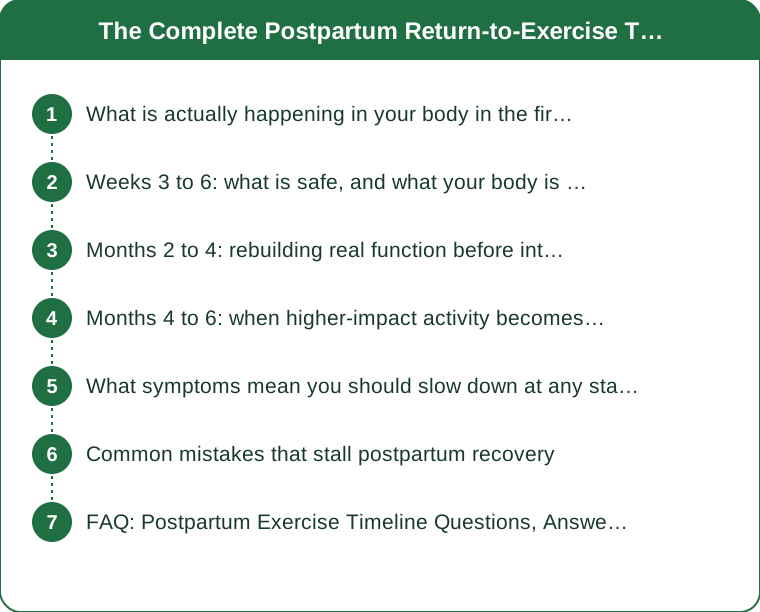
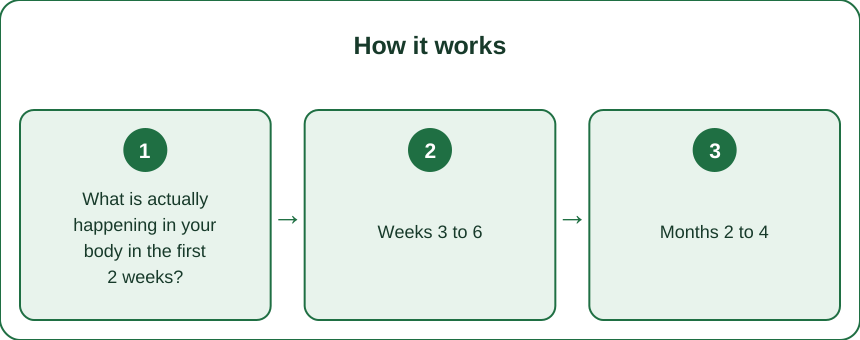
What is actually happening in your body in the first 2 weeks?
In the first 14 days, your uterus is shrinking back toward its pre-pregnancy size, your hormone levels are dropping sharply, and — whether you delivered vaginally or by cesarean — internal tissue is actively healing. This is true even if you feel surprisingly okay.
Relaxin, the hormone that loosened your joints for birth, is still elevated and takes months, not weeks, to fully normalize. That means your joints are more mobile and less stable than usual, which is part of why ‘just going for a light run’ at week 2 is a genuinely different risk than it would be normally.
The only appropriate movement here is gentle walking at a pace you’d use browsing a store, plus basic diaphragmatic breathing to begin reconnecting with your deep core. Nothing about this phase should feel like exercise — it should feel like recovery.
Weeks 3 to 6: what is safe, and what your body is signaling
This window is about restoring basic function, not building fitness. Walking distance can gradually increase if it feels good the next day, not just in the moment. Gentle pelvic floor activation (not aggressive kegel routines) and posture-focused breathing are appropriate here.
Watch for two signals that mean you’re doing too much too soon: any increase in bleeding after activity (a sign your body needs more rest, not less), and any bulging or doming down the midline of your stomach when you sit up or strain — that’s a visible sign of diastasis recti that needs gentler core work, not core work skipped entirely.
By week 6, most people get medical clearance for ‘normal activity.’ That phrase does a lot of unearned work. It generally means tissue has healed enough that the risk of harm from movement has dropped — it does not mean your deep core and pelvic floor have regained pre-pregnancy strength and coordination. Those systems typically need months more.
Months 2 to 4: rebuilding real function before intensity
This is the phase most people skip past too fast, and it’s the one that actually determines whether your eventual return to running, lifting, or classes goes smoothly or triggers pain and setbacks.
The priority here is functional core and pelvic floor rehab: controlled breathing connected to pelvic floor engagement, gentle bridges, bird-dogs, and modified planks that don’t cause doming or bulging. If you have access to a pelvic floor physical therapist, this window is the highest-value time to see one — even one or two sessions can catch issues that are invisible without an internal assessment.
Strength work can begin reintroducing light resistance — bodyweight squats, light dumbbell rows — but volume and intensity should stay conservative. The test isn’t ‘can I do it,’ it’s ‘can I do it without any leaking, heaviness, doming, or pain, during or up to 24 hours after.’ Any of those signs means dial back, not push through.

Months 4 to 6: when higher-impact activity becomes appropriate for most people
Running, jumping, and heavier lifting are the activities most associated with postpartum injury when reintroduced too early, because they load a pelvic floor and core that may not yet be fully coordinated under impact, even if they feel ‘fine’ at rest.
A widely used readiness marker: comfortably completing 30 minutes of brisk walking, 10 single-leg bridges per side with control, and 10 controlled squats — all without leaking, heaviness, or pain — before adding running or jumping back in. This isn’t a rigid rule, but it’s a reasonable, evidence-informed bar most bodies should clear first.
Even once cleared, the standard advice is to return to running via a structured walk-run progression over several weeks rather than resuming your old mileage on day one. Bodies that skip this step are the ones most likely to end up sidelined by pain a few weeks in, not because they weren’t strong, but because impact tolerance rebuilds gradually, separately from general strength.
What symptoms mean you should slow down at any stage?
Regardless of what week or month you’re in, certain signals override the calendar entirely: any leaking of urine during exercise, a feeling of heaviness or pressure in the pelvis, visible or felt doming along your abdominal midline, or pain that doesn’t settle within a day.
These aren’t signs to push through with better mental toughness — they’re your body telling you the current load exceeds current capacity. The fix is almost always to reduce intensity or complexity for a week or two and rebuild the step you skipped, not to stop moving altogether.
This pattern — symptom, scale back, rebuild, retry — is completely normal and doesn’t mean you’re recovering slowly. It means you’re recovering correctly, catching issues before they become chronic ones.
Common mistakes that stall postpartum recovery
The single most common mistake is treating the six-week clearance as a starting line for pre-pregnancy intensity, rather than as a checkpoint that tissue has healed enough to begin a gradual rebuild.
A close second is skipping pelvic floor and deep core reconnection work because it feels ‘too easy’ compared to a real workout — this foundational phase is unglamorous, but it’s the piece that determines whether higher-intensity training later goes smoothly.
A third common mistake is comparing your timeline to someone else’s, especially on social media, where postpartum return-to-fitness stories are heavily skewed toward outliers and rarely show the setbacks that happened along the way. Recovery timelines genuinely vary by birth type, prior fitness level, sleep, and countless factors outside your control.
FAQ: Postpartum Exercise Timeline Questions, Answered
Is it normal to still feel core weakness at 3 months postpartum?
Yes, this is common, especially if formal core rehab hasn’t started yet. Deep core and pelvic floor coordination often takes 3-6 months of consistent, targeted work to substantially rebuild, longer if diastasis recti is present.
When can I start running again after birth?
Most guidance suggests waiting until at least 3 months postpartum and passing basic strength and control markers (like pain-free single-leg bridges and squats), then returning via a gradual walk-run progression, not a return to prior mileage immediately.
Do I need to see a pelvic floor physical therapist if nothing hurts?
A session can still be valuable even without pain — issues like mild pelvic organ prolapse or diastasis recti can be present without obvious symptoms, and an assessment can shape a safer return-to-exercise plan.
Why does my recovery feel slower than other people I know?
Birth type, prior fitness, sleep, nutrition, and even genetics all affect healing speed. A slower timeline is not a sign you’re doing something wrong — it’s a sign your body needs its own pace, not someone else’s.
TL;DR:
- The six-week clearance signals healed tissue, not restored strength — treat it as a checkpoint, not a starting line
- Weeks 3-6 are for gentle walking and pelvic floor reconnection, not workouts
- Months 2-4 are the highest-value window for functional core and pelvic floor rehab
- Higher-impact activity like running is generally appropriate around months 4-6, and only after passing basic strength markers
- Leaking, heaviness, doming, or pain at any stage mean scale back and rebuild that step, not push through
This is general information, not medical advice — work with your own provider, and ideally a pelvic floor specialist, to time your specific return.
See It in Motion
Seen here: Maternity Capris with Side Pockets — shop it on bubblelime.com
Keep Reading
This article is for general informational and styling purposes only. Fit, sizing, and product availability may vary.