Postpartum Hair Loss and Nail Changes: What's Actually Happening and When It Stops

Quick Answer: Postpartum hair shedding usually starts around 3–4 months after birth, peaks over a few months, and mostly resolves by 9–12 months. It happens because pregnancy’s high estrogen kept hair in its growth phase, and the post-birth hormone drop releases all of it at once — a pattern called telogen effluvium. Gentle handling and good nutrition help; most “postpartum hair” products don’t. See a provider if shedding is patchy, extreme, or still going past a year.
Month three. You’re in the shower, you run your hands through your hair, and a genuinely alarming amount comes away in one go.
Then it happens again the next day. And the next. You start avoiding the drain.
Here’s the thing worth knowing before you panic-order a supplement: this is one of the most predictable events in the entire postpartum year, and it has an end date.

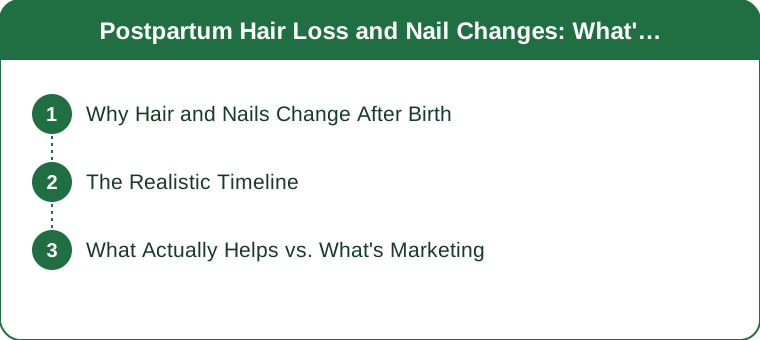
Why Does Hair Fall Out After Pregnancy?
It isn’t loss. It’s a delayed shed — and the mechanism is genuinely elegant once you see it.
Normally, about 85–90% of your hair is in a growth phase at any moment, and the rest is in a resting phase, ready to fall out. You lose roughly 50–100 hairs a day and never notice.
During pregnancy, elevated estrogen extends that growth phase. Hair that would normally have shed simply… doesn’t. For nine months, you were in a hair surplus. That’s where the famously thick pregnancy hair comes from — you weren’t growing more, you were shedding less.
After birth, estrogen drops sharply within days. All those hairs that were held in the growth phase get released into the shedding phase at roughly the same time. Months of postponed shedding arrives in a compressed window.
The clinical name is telogen effluvium, and it’s extremely common — most estimates put it somewhere around half of new mothers experiencing noticeable shedding. It’s a normal physiological event, not a disorder and not a deficiency.
Nails shift too, from the same hormonal change — but less predictably. Some women find nails grew faster and stronger in pregnancy then turn brittle, ridged or peeling afterwards. Others see the opposite. There’s much more individual variation with nails than with hair.
Breastfeeding can stretch the timeline slightly, since hormones are still shifting. It doesn’t cause the shedding and stopping won’t reverse it.
The reframe: this is hormones settling, not a nutrient deficiency or a health problem, for the vast majority of new mothers.

When Does Postpartum Hair Loss Stop?
The timeline is reassuringly consistent:
- Months 0–2: usually nothing unusual. This is why the shed feels like it comes out of nowhere.
- Months 3–4: shedding typically begins. This is the delayed part — the hormone drop happened at birth, but the hair cycle takes weeks to respond.
- Months 4–6: the peak window. This is when it feels dramatic, especially around the temples and hairline.
- Months 6–9: shedding slows, and you start seeing short wispy hairs along the hairline. Those flyaways that won’t lie flat are new growth, not breakage. They’re good news wearing an annoying disguise.
- Months 9–12: density returns to near-normal for most women.
Nails run on a looser clock. Because a fingernail takes roughly 6 months to grow out completely, changes that started around birth are still visibly growing out well into the second half of the year. Most settle as hormones fully stabilise.
If you’re inside the peak window right now: patience is the actual treatment. Not a product.
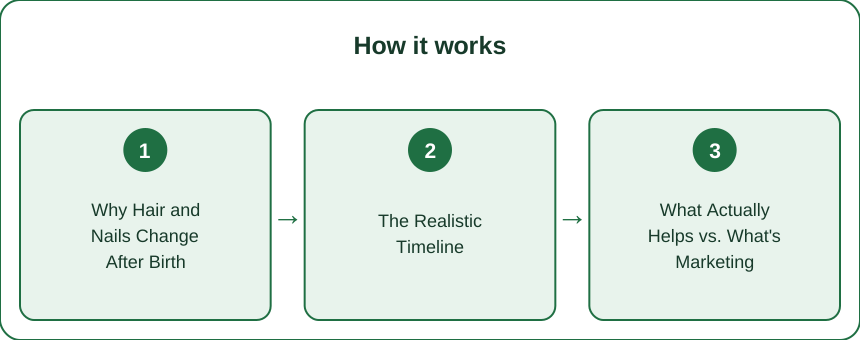
Myth vs Fact: Postpartum Hair Products
Myth: Special postpartum shampoos reduce shedding. Fact: Volumising and thickening products can make remaining hair look fuller — that’s a genuine cosmetic effect. But they don’t act on the hormonal cycle driving the shed. You cannot out-product a hormone.
Myth: Biotin will fix it. Fact: Biotin helps people who are actually deficient in biotin, which is rare. Evidence for accelerating regrowth in healthy, non-deficient women is weak. It also interferes with thyroid and some cardiac blood tests — genuinely worth mentioning to your provider before starting, particularly since thyroid issues are common postpartum.
Myth: It means you’re not eating well enough. Fact: The shed is hormonal. That said, nutrition does support the regrowth phase — adequate protein, iron and overall calories matter, and iron deficiency is common after birth and can worsen shedding independently. Worth a blood test if you’re wiped out as well as shedding.
Myth: Cutting your hair helps it grow back. Fact: It doesn’t change the cycle. It can make things look and feel much better while you wait, and shorter hair means less weight and less visible shedding — a legitimate coping strategy, just not a treatment.
What genuinely helps:
- Gentle handling. Wide-tooth comb, detangle from the ends up, no aggressive brushing on wet hair.
- Loose styles. Tight ponytails and buns add mechanical breakage on top of the hormonal shed — and can cause traction alopecia if you’re at it constantly.
- Solid nutrition. Protein at every meal, iron-rich foods, and eating enough. Not a restrictive diet on top of everything else.
- Low heat. Less straightening and blow-drying while the new growth is fragile.
- Time. Which is unsatisfying and also the answer.
When Should You See a Provider?
Most of this needs no intervention. But get it checked if:
- Shedding is dramatically excessive rather than heavy-but-diffuse.
- You’re losing hair in distinct patches or bald spots — that’s a different condition, not telogen effluvium.
- It’s still going strong past 12 months.
- You’ve got other symptoms — persistent exhaustion, weight changes, feeling cold, low mood, brittle nails all at once. Postpartum thyroiditis and iron deficiency are both common, both easily tested, and both treatable.
- Your scalp is itchy, sore or flaking.
A simple blood panel for iron, ferritin and thyroid answers most of these questions quickly.
FAQ
How much hair loss is normal postpartum?
Everyone sheds 50–100 hairs a day normally; in the postpartum peak it can look like several times that, and it’s still within the expected range for telogen effluvium. What isn’t typical is losing hair in patches, seeing visible scalp in specific spots, or shedding that’s still heavy after a year. Those warrant a check.
Will my hair grow back the same as before?
For most women, yes — density returns to near pre-pregnancy levels by around 12 months. Some notice texture changes, more waviness or a slightly different hairline, since hormonal shifts can alter follicle behaviour. Genuine permanent thinning after a single pregnancy is uncommon.
Does breastfeeding cause postpartum hair loss?
No. The shed is driven by the estrogen drop after delivery, and it happens whether or not you breastfeed. Ongoing hormonal changes during breastfeeding may stretch the timeline slightly for some women, but stopping won’t reverse the shedding — and it isn’t the cause.
TL;DR:
- It’s telogen effluvium: pregnancy held hair in the growth phase, the hormone drop released it all at once.
- Starts around month 3–4, peaks months 4–6, mostly resolved by 9–12 months.
- Those wispy hairline flyaways at month 6–9 are regrowth, not breakage.
- What helps: gentle handling, loose styles, enough protein and iron, low heat, time.
- What doesn’t: most postpartum-specific shampoos and supplements. Ask before starting biotin — it skews thyroid tests.
- See your provider for patchy loss, extreme shedding, past 12 months, or if you’re exhausted too.
See It in Motion
Seen here: Maternity Capris with Side Pockets — shop it on bubblelime.com
Keep Reading
This article is for general informational and styling purposes only. Fit, sizing, and product availability may vary.