Why 'Wait Until Your 6-Week Checkup' Isn't the Full Postpartum Exercise Answer

Quick Answer: The 6-week checkup is a general clearance milestone, not an individualized readiness assessment — actual readiness depends on delivery type, healing progress, and specific findings like diastasis recti or pelvic floor function that a single standard checkup may not fully evaluate.
Everyone says 6 weeks. Your checkup comes, you get a nod of clearance, and then you’re left wondering if that generic green light actually applies to your specific body and specific delivery.

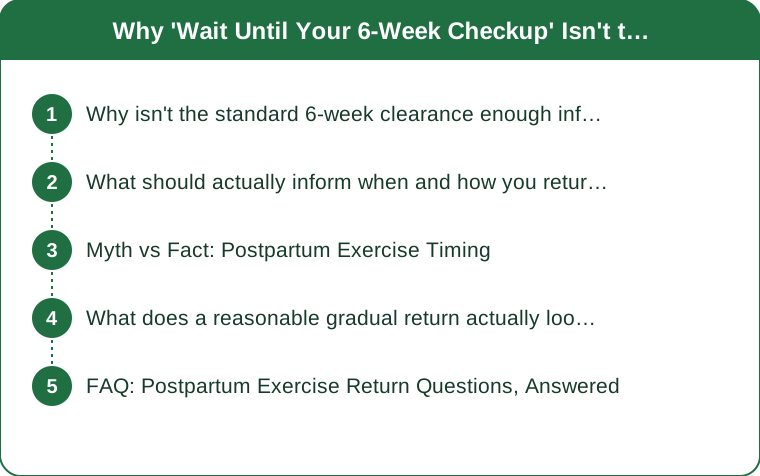
Why isn’t the standard 6-week clearance enough information for everyone?
Because it’s designed as a general safety milestone for the general population, not an individualized assessment of your specific healing — a straightforward vaginal delivery with no complications and a C-section with an abdominal incision have very different actual healing timelines, even though both often get the same ‘6 weeks’ guidance.
The checkup typically confirms that healing is progressing normally in general terms, but doesn’t always include a specific evaluation of core function, diastasis recti (abdominal separation), or pelvic floor strength — all of which matter significantly for what kind of exercise is actually appropriate.
What should actually inform when and how you return to exercise?
A pelvic floor and core function assessment, ideally from a pelvic floor physical therapist, gives far more specific information than a general clearance — checking for diastasis recti, pelvic floor strength, and any pain with movement before resuming anything beyond gentle walking.
This isn’t available or covered everywhere, but where accessible, it’s a meaningfully more individualized starting point than a calendar date alone.

Myth vs Fact: Postpartum Exercise Timing
Myth: Once cleared at 6 weeks, you can return to your pre-pregnancy workout routine. Fact: Clearance means it’s generally safe to begin returning to activity, not that your pre-pregnancy intensity level is appropriate yet — a gradual return is still needed even after clearance.
Myth: If you feel fine, your core and pelvic floor are definitely fine. Fact: Diastasis recti and pelvic floor weakness can be present without obvious pain or symptoms, which is why a specific assessment catches things a general ‘feeling fine’ doesn’t.
Myth: C-section recovery and vaginal delivery recovery follow the same exercise timeline. Fact: C-section recovery involves abdominal incision healing that generally requires a more cautious progression for core-loading movements specifically.
What does a reasonable gradual return actually look like?
Start with walking and gentle pelvic floor engagement exercises, progressing to light core and strength work only once those feel comfortable and controlled, generally over several weeks rather than jumping back to pre-pregnancy intensity immediately.
Watching for warning signs — leaking, pelvic pressure/heaviness, or visible abdominal doming during exercise — matters more than a fixed timeline, since those are signals to scale back regardless of how many weeks postpartum you are.
FAQ: Postpartum Exercise Return Questions, Answered
Is walking safe before the 6-week checkup?
Gentle walking is generally considered safe very early postpartum for most uncomplicated deliveries, but always follow your own provider’s specific guidance given your delivery details.
What are signs I’m progressing too fast with postpartum exercise?
Leaking urine, pelvic heaviness or pressure, visible abdominal doming, or increased bleeding during or after exercise are all signals to scale back and consult your provider.
Is a pelvic floor physical therapist necessary for every postpartum recovery?
Not strictly necessary for every case, but it’s increasingly recommended as a standard part of postpartum care, especially for anyone with core or pelvic floor symptoms. This is general information, not medical advice — always follow your own provider’s guidance.
TL;DR:
- The 6-week checkup is a general milestone, not an individualized readiness assessment
- Delivery type and specific findings like diastasis recti significantly affect actual readiness
- A pelvic floor assessment provides more specific guidance than clearance alone
- Watch for leaking, pressure, or doming as signals to scale back, regardless of timeline
Clearance is a green light to start gradually, not a signal to jump back to where you left off — your specific body gets to set the actual pace.
See It in Motion
Seen here: Maternity Capris with Side Pockets — shop it on bubblelime.com
Keep Reading
This article is for general informational and styling purposes only. Fit, sizing, and product availability may vary.