Diastasis Recti Recovery, Week by Week: What Realistic Progress Actually Looks Like

Quick Answer: Most diastasis recti narrows gradually over 8-12 weeks with correct core work, with meaningful but not complete closure common by week 12. Full closure varies widely and some gap is normal to retain — the goal is function and tension, not a specific number on a tape measure.
You check the gap with your fingers every few days, half-hoping for a dramatic before-and-after. Real diastasis recovery rarely works that way — it’s slow, uneven week to week, and driven more by how well the tissue tensions than by the raw width of the gap.

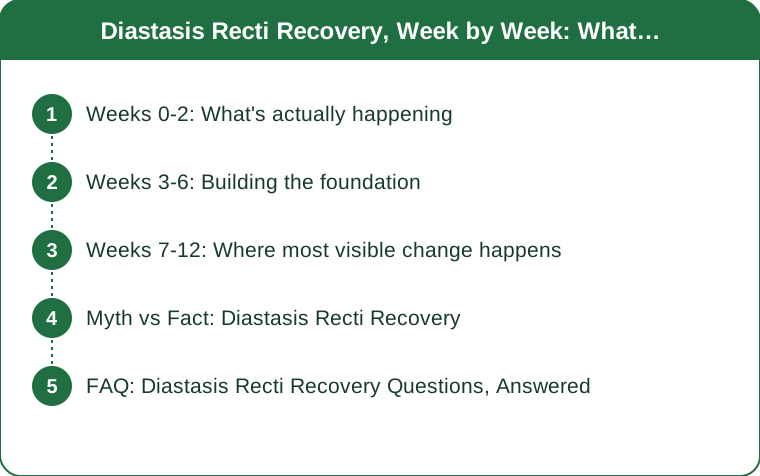
Weeks 0-2: What’s actually happening
This is a rest and awareness window, not a training window. Tissue is still healing from delivery, and the priority is gentle diaphragmatic breathing and posture awareness, not exercises aimed at “closing the gap.”
Most people can’t and shouldn’t meaningfully assess the gap yet — swelling and fresh healing distort what you’re feeling. Checking now mostly creates anxiety without giving you accurate information.
Weeks 3-6: Building the foundation
This is when gentle, cleared-for-exercise core reconnection work typically starts (with your provider’s clearance, especially after a C-section). Focus is on transverse abdominis activation — a gentle drawing-in, not crunches or sit-ups, which can worsen separation at this stage.
Progress here is felt more than seen: better bracing during daily movements like standing up from a chair, less coning or doming when you engage your core.

Weeks 7-12: Where most visible change happens
This is the window where tension across the gap — not just width — starts improving noticeably for people doing consistent, correctly-progressed work. A gap that still measures 2 fingers wide can be fully functional if it tensions well under load; a narrower gap with poor tension is actually the worse outcome.
By week 12, many people see partial closure and, more importantly, a core that supports daily life without doming, back pain, or a sense of instability.
Myth vs Fact: Diastasis Recti Recovery
Myth: A wider gap always means worse recovery. Fact: Tension and function matter more than raw width. A narrow gap with no tension can be less functional than a wider gap that engages well.
Myth: Crunches will close the gap faster. Fact: Traditional crunches often increase intra-abdominal pressure in a way that worsens separation — deep core activation work is the actual driver of healing.
Myth: If it’s not closed by 12 weeks, it never will. Fact: Meaningful improvement continues well past 12 weeks for many people, especially with consistent, progressive core work — 12 weeks is a checkpoint, not a deadline.
FAQ: Diastasis Recti Recovery Questions, Answered
How do I check my own diastasis recti gap?
Lie on your back, knees bent, lift your head slightly, and feel above and below your belly button with your fingers for the gap width and how firmly the tissue tensions — width alone isn’t the full picture.
When should I see a pelvic floor physical therapist?
If you notice doming/coning during exercise, ongoing back pain, a gap wider than roughly 2-3 finger-widths past 12 weeks, or any bulging — these warrant a professional assessment, not just more home exercises.
Can diastasis recti heal without any specific exercises?
Some narrowing happens naturally, but tension and function generally improve fastest with targeted core reconnection work. This is general information, not medical advice — a pelvic floor PT can give you a plan specific to your body.
TL;DR:
- Weeks 0-2: rest and breathing, not gap-checking
- Weeks 3-6: gentle transverse abdominis activation, no crunches
- Weeks 7-12: tension improves more than raw width — that’s the real progress marker
- Doming, back pain, or a gap past 12 weeks that isn’t improving warrants a pelvic floor PT. This is general information, not medical advice.
See It in Motion
Seen here: Maternity Capris with Side Pockets — shop it on bubblelime.com
Keep Reading
This article is for general informational and styling purposes only. Fit, sizing, and product availability may vary.