The Postpartum Core Timeline Nobody Explains Month by Month

Quick Answer: Your core isn’t ‘healed’ at the six-week checkup — that appointment clears you for daily activity, not heavy training. Real core recovery unfolds over 4-12 months, in stages: healing tissue, relearning coordination, then rebuilding load capacity.
You got the six-week all-clear and figured that meant back to normal. Then you tried a plank and your stomach domed like a tent. That’s not a setback. That’s your core telling you the timeline is longer than the paperwork suggested.

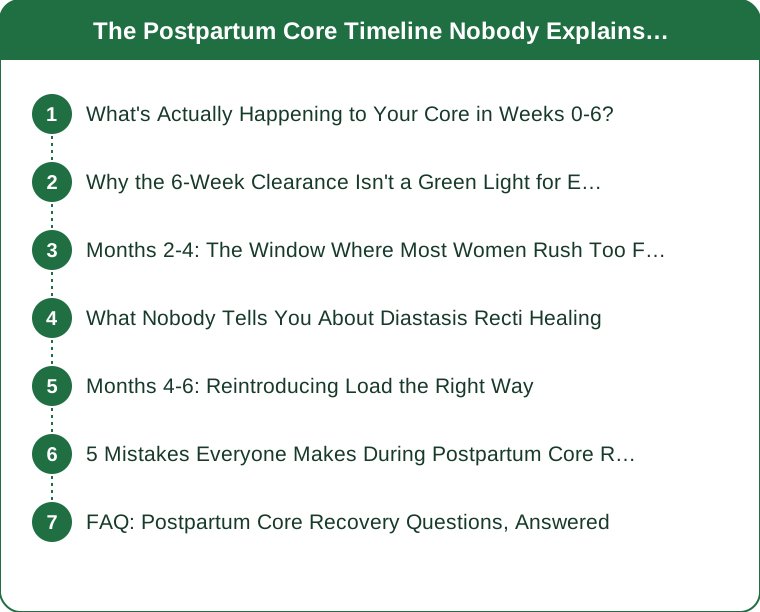
What’s Actually Happening to Your Core in Weeks 0-6?
In the first six weeks, your body is doing structural repair, not strength building. The uterus is shrinking back down, the linea alba (the connective tissue between your abdominal muscles) is still soft and stretched from pregnancy, and if you had a C-section, that incision is healing through multiple tissue layers, not just skin.
This is why your six-week OB or midwife checkup exists: it’s confirming the incision or vaginal tissue has closed and there’s no infection or major complication. It is not a functional assessment of your core or pelvic floor strength. Most providers simply don’t have the 20-30 minutes it takes to properly test diastasis recti gap width, pelvic floor coordination, or breathing mechanics in a standard postpartum visit.
During these six weeks, your job is walking, gentle breathing work, and rest — not crunches, not heavy lifting beyond your baby, and not rushing back to your pre-pregnancy workout. The tissue needs time before it can handle load, regardless of how strong you felt the week before delivery.
Why the 6-Week Clearance Isn’t a Green Light for Everything
‘Cleared for exercise’ at six weeks means cleared to start reintroducing movement gradually — it’s the starting line, not the finish line. Your connective tissue continues remodeling for up to a year postpartum, and pelvic floor muscles that were stretched by pregnancy and delivery need dedicated retraining, not just time.
The mistake most women make here is translating ‘cleared’ into ‘back to my old program.’ Jumping straight into running, heavy squats, or high-impact classes at week seven often triggers the exact problems — doming, leaking, heaviness or pressure in the pelvis — that a slower on-ramp would have avoided.
A better read of the six-week clearance: you’re cleared to begin a graded return, starting with walking, breath-connected core activation, and glute and hip work, then adding load progressively over the following weeks based on how your body actually responds, not based on the calendar.
Months 2-4: The Window Where Most Women Rush Too Fast
This is statistically where the most setbacks happen. You’re feeling more like yourself, sleep might be marginally better, and the urge to ‘get your body back’ is strongest right around this window — which is exactly when the tissue is still mid-repair, not fully remodeled.
Signs you’re pushing ahead of your tissue’s readiness: abdominal doming or bulging during effort, a heaviness or dragging sensation in the pelvis by end of day, leaking during jumping or laughing, or lower back pain that wasn’t there before pregnancy. None of these are ‘normal, just push through’ — they’re your core and pelvic floor telling you the current load exceeds current capacity.
The fix isn’t stopping entirely. It’s matching intensity to what your body is showing you: if walking and bodyweight work feel solid with zero symptoms, that’s your cue to add light load. If symptoms show up, that’s your cue to hold at the current level a bit longer, not push through it.

What Nobody Tells You About Diastasis Recti Healing
Diastasis recti — the separation between your left and right abdominal muscles — is present in almost all women by the third trimester because it’s how your body makes room for the baby. The part nobody tells you: the gap width itself matters less than whether the tissue can generate tension across it.
Two women can have identical gap measurements and completely different function — one has good tension and no symptoms, the other has poor tension and doming, back pain, or a ‘mom pooch’ that doesn’t respond to normal ab work. This is why chasing a specific gap number is less useful than testing function: can you brace your core without doming, breathe into your ribs without your belly ballooning forward, and load your core under real movement without symptoms.
Most diastasis improves significantly with the right progressive loading over 3-6 months. A pelvic floor physical therapist can assess tension and coordination directly — this is worth the appointment, especially if doming or symptoms persist past month three despite consistent gentle work.
Months 4-6: Reintroducing Load the Right Way
By months four through six, if your foundational work (breathing, gentle bracing, walking, hip and glute strength) has been solid and symptom-free, this is typically the window for reintroducing real load — light weight training, controlled core work, and eventually running for those who want it back.
The progression that works best follows this order: first master breath-connected bracing under no load, then add bodyweight movements (bird dogs, dead bugs, modified planks), then light external load (goblet squats, suitcase carries), and only then higher-impact work like running or jumping. Skipping steps — going straight from walking to running, for example — is the single most common cause of setbacks in this window.
Running specifically deserves its own checkpoint: most postpartum-specific guidelines suggest being able to do single-leg hops, jog in place for a minute, and hold a plank without doming or leaking before returning to a running program, regardless of how many months have passed.
5 Mistakes Everyone Makes During Postpartum Core Recovery
Mistake 1: Chasing ‘flat’ instead of function. A flatter stomach can happen while your core is still functionally weak underneath — cosmetic and functional recovery are different things, and chasing the first often delays the second.
Mistake 2: Holding your breath during effort. Bracing by holding your breath (versus exhaling on exertion) spikes intra-abdominal pressure and is a common cause of doming — breath mechanics matter as much as the exercise choice.
Mistake 3: Comparing your timeline to someone else’s postpartum Instagram. Recovery speed depends on delivery type, prior fitness, genetics, and how much rest you’re actually getting — none of which are visible in a 15-second clip.
Mistake 4: Skipping the pelvic floor because ‘nothing hurts.’ Pelvic floor dysfunction is often silent until you push into higher-impact training, which is why proactive PT assessment beats waiting for a symptom.
Mistake 5: Stopping the moment symptoms improve. Diastasis and pelvic floor strength both need continued, progressive loading well past the point symptoms disappear, or they tend to regress once you return to full activity.
FAQ: Postpartum Core Recovery Questions, Answered
How do I know if I have diastasis recti right now?
Lie on your back, knees bent, and lift your head slightly while feeling along your midline above and below your belly button — a gap wider than about two finger-widths, especially with doming, suggests diastasis worth having assessed by a pelvic floor PT.
Is it normal to still feel core weakness a year after birth?
Some residual difference is common, but persistent doming, leaking, or a wide unresponsive gap at a year usually means the tissue needs targeted rehab rather than more time alone — this is a reasonable point to see a pelvic floor specialist if you haven’t already.
Can I do core work while breastfeeding or before my period returns?
Yes — breastfeeding and hormonal status don’t block core rehab, though relaxin levels can keep joints slightly more lax during lactation, which is one more reason to progress load gradually rather than jumping straight back to pre-pregnancy intensity.
This is general information, not medical advice — persistent doming, leaking, pelvic pain, or pressure are worth a pelvic floor physical therapist’s assessment regardless of how many months postpartum you are.
TL;DR:
- The six-week clearance means cleared to start reintroducing movement, not cleared for your old program
- Months 2-4 are the highest-risk window for rushing ahead of tissue readiness — watch for doming, leaking, or heaviness
- Diastasis recovery is about tension and function, not just closing a gap number
- Progress load in order: breath and bracing, bodyweight, light load, then impact — skipping steps causes setbacks
- A pelvic floor PT assessment is worth it any time symptoms persist past month three
Your core recovery timeline is measured in months, not weeks — matching the pace to what your body actually shows you beats matching it to a calendar.
See It in Motion
Seen here: Maternity Capris with Side Pockets — shop it on bubblelime.com
Keep Reading
This article is for general informational and styling purposes only. Fit, sizing, and product availability may vary.