Postpartum Core Recovery: Gentle Moves to Rebuild Strength

Quick Answer: Start postpartum core recovery with deep breathing and gentle pelvic floor connection in the first weeks, then progress to heel slides, pelvic tilts, and bird-dogs once those feel steady — usually over 6 to 12 weeks. Get medical clearance before you begin, and stop any move that causes doming, leaking, or pain.
You finally get the six-week all-clear from your doctor, and you stand in front of your closet staring at your old leggings like they belong to someone else. Your middle feels like a rubber band that forgot how to snap back. Here’s the part nobody tells you at the appointment: it can snap back, it just needs a real plan instead of a pile of crunches.

How Do You Start Rebuilding Your Core After Birth?
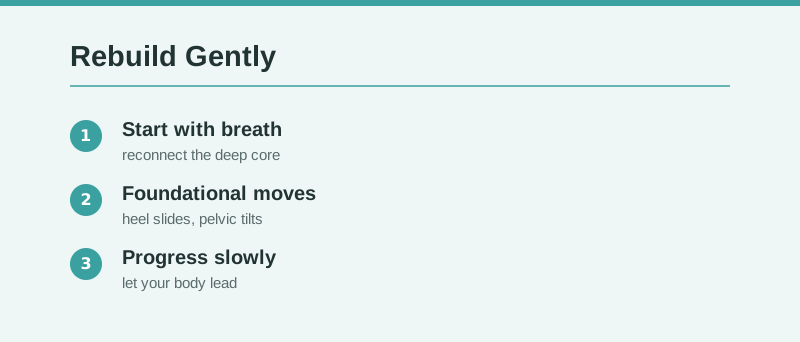
Before you do a single “exercise,” you need to reconnect with the muscles that got stretched, pushed, and rearranged over the last nine months. Breathing is the actual starting line, not a warm-up you skip to get to the real work.
Try this a few times a day, even while you’re nursing or scrolling your phone one-handed:
- Inhale through your nose and let your ribs expand out to the sides
- Exhale slowly and gently draw your belly button toward your spine
- Hold that gentle draw-in for 2-3 seconds, then release
- Repeat for 8-10 breaths, once or twice daily
That slow exhale activates your deep transverse abdominis and your pelvic floor — the two muscle groups that need to fire correctly before anything else will work right. It feels almost too easy to count as “exercise.” That’s the point. You’re re-wiring a connection, not burning calories.
What Are the Safest First Moves for Postpartum Core Recovery?
Once the breath-and-draw-in feels automatic, usually after a week or two of practice, you can layer in a few gentle foundational movements. Keep everything slow and small — this isn’t the phase for intensity.
- Heel slides: lying on your back, slide one heel out and back, 8 reps per side
- Pelvic tilts: flatten your lower back into the floor on the exhale, 10-12 reps
- Slow bird-dogs: on hands and knees, extend opposite arm and leg without letting your back sag, 6-8 reps per side
Move deliberately and breathe through every single rep — rushing defeats the purpose. Stop immediately if you notice any doming or bulging along your midline, since that’s your body telling you the load is more than your core can currently manage.

What Is Diastasis Recti and How Do You Know If You Have It?
Many new moms have some degree of abdominal separation called diastasis recti, where the two sides of your rectus abdominis muscle spread apart to make room for your growing baby. You can do a simple self-check: lie on your back, knees bent, and gently press your fingers along the midline of your belly as you lift your head slightly — if you feel a gap wider than about two finger-widths, mention it to your provider.
This isn’t rare, and it isn’t your fault, but it does change which exercises are safe for you right now. Avoid traditional crunches, sit-ups, or anything that makes your belly dome or bulge outward — those movements can push the separation wider instead of closing it. A quick note on balance and stability too: your center of gravity has shifted after pregnancy, and a still-healing core means your balance may genuinely feel different for a while, so hold onto a chair or wall for any move that challenges it.
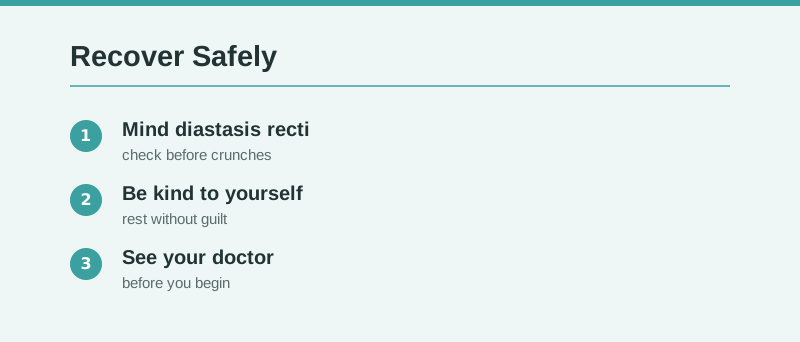
Before starting any structured core program, check in with your doctor or a pelvic floor physical therapist, especially if you notice doming, leaking, heaviness, or pain with any movement. This article is general information, not a substitute for a professional assessment of your specific body.
How Fast Should You Progress with Postpartum Core Work?
Recovery is not a race, and it definitely isn’t a 30-day challenge with a finish line. Add new movements only once the current ones feel genuinely easy, and let your own body set the pace instead of a calendar, an app, or someone else’s Instagram timeline.
Every recovery timeline is different depending on your delivery, your baseline fitness, and how much sleep you’re realistically getting. Weeks of small, consistent effort — not one heroic workout — is what rebuilds a core that can support you for years, not just for the next photo.
What Nobody Tells You About Postpartum Core Recovery
- “Bouncing back” isn’t the goal, and it’s not even the right metaphor — you’re building something new on top of a body that did something enormous.
- Feeling nothing during breath-work is normal at first — the connection often comes back gradually, not in one dramatic “aha” session.
- A little soreness is fine; sharp pain or leaking is not — those are your body’s stop signs, not weakness.
- Comparing your six-week self to someone else’s six-month self will only make you feel worse — timelines vary enormously and that’s completely normal.
Postpartum Core Recovery FAQ
How soon after birth can I start core exercises?
Most providers clear gentle breathing and pelvic floor work within the first couple of weeks, but structured movement usually waits for your six-week postpartum checkup. Always get your individual clearance first, since delivery type and any complications change the timeline.
Can I do regular ab exercises like sit-ups postpartum?
Hold off on sit-ups and crunches until a professional has checked you for diastasis recti and given you the go-ahead. These moves can put excess pressure on a core that isn’t ready, so gentler options are the safer starting point.
How long does it take to rebuild core strength after pregnancy?
Most people notice real progress over 6-12 weeks of consistent, gentle practice, though full recovery can take several months. Patience and consistency matter far more than intensity here.
TL;DR:
- Start with breathing and gentle pelvic floor connection before any “real” exercise
- Add heel slides, pelvic tilts, and slow bird-dogs once breathing feels automatic
- Check for diastasis recti and avoid crunches or doming movements until cleared
- Get your doctor’s or physical therapist’s clearance before progressing your program
- Progress slowly, expect your balance to feel different for a while, and be patient with yourself
See It in Motion
Seen here: Maternity Capris with Side Pockets — shop it on bubblelime.com
Keep Reading
This article is for general informational and styling purposes only. Fit, sizing, and product availability may vary.