Exercising After a C-Section: The Gentle, Gradual Return That Protects Your Recovery

Quick Answer: A C-section is major abdominal surgery, so the return takes longer than after a vaginal birth. Wait for your provider’s clearance — often 8 weeks or more — then start with walking and breath-based core work only. No crunches or heavy lifting early. Stop and call your provider for pain, bleeding or any incision changes.
Nobody hands you a leaflet that says “you have just had abdominal surgery.” They hand you a baby.
Both things are true, and the surgery half tends to get lost — including in most of the postpartum fitness advice you’ll read.
Here’s the version that accounts for it.

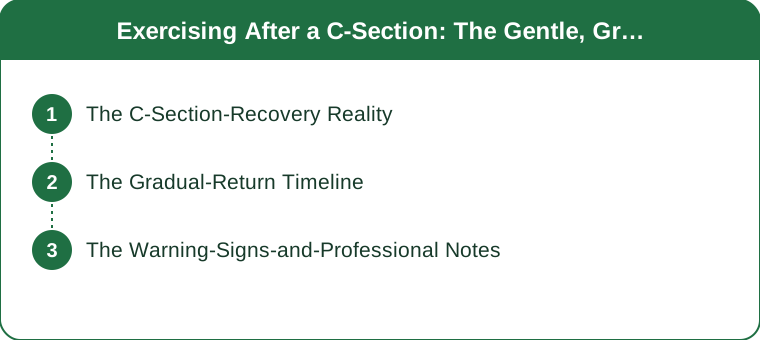
Why does C-section recovery take longer?
Because layers of tissue were cut and are now knitting back together.
A caesarean involves incisions through skin, fat, fascia and the uterine wall. Fascia — the connective tissue that transmits force across your abdomen — is slow to heal and takes months to regain much of its strength, even when the outside looks completely fine.
That’s the key mismatch. The scar looking healed doesn’t mean the deep tissue is. People routinely feel fine at six weeks and load the core far too early on the strength of that.
Your abdominal muscles have also been through it — retracted during surgery, and often slow to reconnect afterwards. Many people describe a genuine disconnect, as if the signal doesn’t reach. That’s normal, common, and it does come back with the right gentle work.
Clearance comes first, always. Not the internet’s timeline, not a friend’s. Many providers clear C-section patients later than vaginal birth, sometimes at 8 weeks or beyond, and the clearance is for gentle activity — not for whatever you were doing before.

What’s the timeline for returning to exercise?
Individual, and worth agreeing with your provider — but the sequence is consistent.
Before clearance: gentle walking only. Short, flat, unhurried. Five to ten minutes, building as it feels comfortable. This isn’t a compromise version of exercise; it’s genuinely what the tissue needs.
After clearance — weeks 1–3: reconnect.
- Diaphragmatic breathing: hand on ribs, breathe wide rather than up. 2 sets of 8.
- Gentle pelvic-floor engagement on the exhale, with a full release afterwards. The release matters as much as the squeeze.
- Continued walking, gradually longer.
Weeks 3–8: rebuild the foundation.
- Bodyweight movements: sit-to-stands, glute bridges, wall push-ups. 2 sets of 10.
- Scar mobility work — only once fully healed and only when your provider or physio has shown you how. Gentle skin movement in different directions.
- Still no crunches, planks or heavy lifting.
Month 3 onward: add load, slowly. Light resistance first, progressing when each level feels genuinely easy. Impact — running, jumping — comes last, ideally after a pelvic-floor assessment.
Expect this whole progression to run longer than it does for a vaginal birth. That’s the surgery, not you.
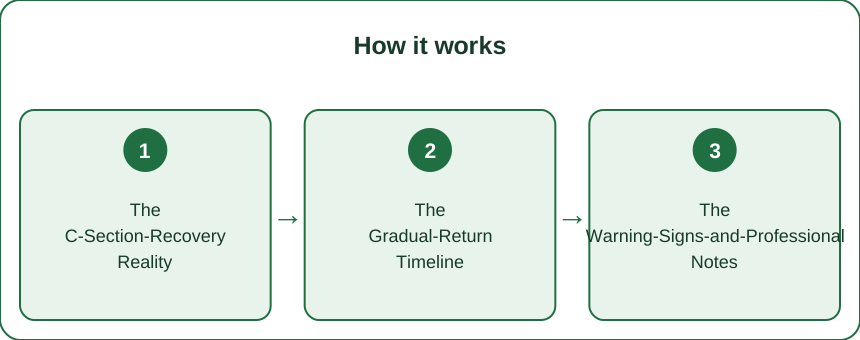
What warning signs mean stop?
Stop and call your provider for any of these:
- Incision changes — redness, swelling, heat, discharge, opening, or increasing pain around the scar
- Bleeding that returns or increases after it had settled
- Pain during or after movement, particularly deep abdominal or pelvic pain
- Doming or coning along your midline during effort
- Leaking urine, or a heaviness or dragging sensation in the pelvic area
- Fever, at any point
These aren’t signs of failure. They’re your body giving you usable information about a healing timeline, and reacting to them early is how you avoid a much longer detour.
Two appointments worth making: a pelvic-health physiotherapist, who can assess your core and pelvic floor and build a plan around your actual healing rather than a generic timeline; and a diastasis check before you load the abdominals at all. In many countries this is routine postpartum care — where it isn’t, it’s still the single highest-value thing you can arrange.
Wearing something with a soft, high waistband that sits above the incision rather than across it makes a real difference in the early weeks. Maternity capris with side pockets are practical for exactly this reason — nothing pressing on a healing scar, and somewhere to put a phone while you walk.
This article is general information. Your provider’s clearance and guidance come first, always — they know your surgery and your recovery, and no article can.
FAQ
When can I lift more than my baby after a C-section?
Most providers advise against lifting anything heavier than your baby for the first 6–8 weeks. After that, build up gradually rather than returning to previous weights — and ask specifically at your clearance appointment.
Can I do planks or crunches after a C-section?
Not early on, and not until your core has been assessed for diastasis and you can maintain proper pressure control. Breath-based work first, then bodyweight, then loading. Rushing this is the most common cause of setbacks.
Will exercise damage my C-section scar?
Appropriate, gradual exercise won’t. Loading heavily before the deep tissue has healed can cause problems, which is why the clearance and the slow ramp exist. Gentle scar mobility work, once fully healed, often helps rather than harms.
TL;DR:
- A C-section is abdominal surgery; fascia takes months to regain strength even when the scar looks healed.
- Wait for clearance — often 8+ weeks — and treat it as permission for gentle activity.
- Sequence: walking → breath and pelvic-floor reconnection → bodyweight → light load → impact last.
- No crunches, planks or heavy lifting early.
- Incision changes, returning bleeding, pain, doming, leaking or fever → stop and call your provider.
Wait for clearance, start with walking and breathing, rebuild the foundation before loading it, and see a pelvic-health physio. The timeline is longer because the surgery was real — and honouring that is what protects the recovery.
See It in Motion
Seen here: Maternity Capris with Side Pockets — shop it on bubblelime.com
Keep Reading
This article is for general informational and styling purposes only. Fit, sizing, and product availability may vary.