The Postpartum Breathing Reset Most Core Programs Skip — and Why It Matters Before Any Crunch

Quick Answer: Postpartum breathing reconnection — coordinating the diaphragm, deep core, and pelvic floor before adding load — is generally recommended as a first step because pregnancy changes the breathing-core relationship, and skipping it can mean core exercises are working against, not with, the pelvic floor.
Most postpartum advice jumps straight to ‘safe core exercises,’ as if the core simply switched off and needs switching back on. What’s usually missing is the step before that: relearning how the diaphragm, deep abdominals, and pelvic floor are supposed to work together in the first place, since pregnancy changes that coordination for almost everyone.

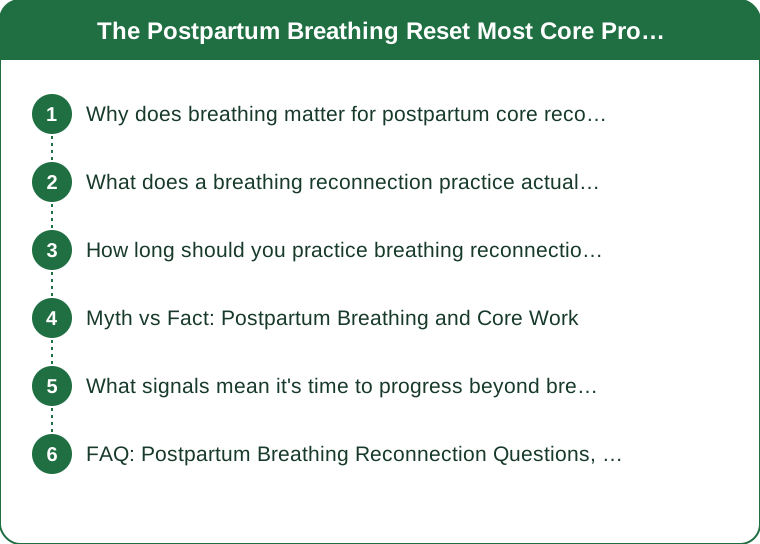
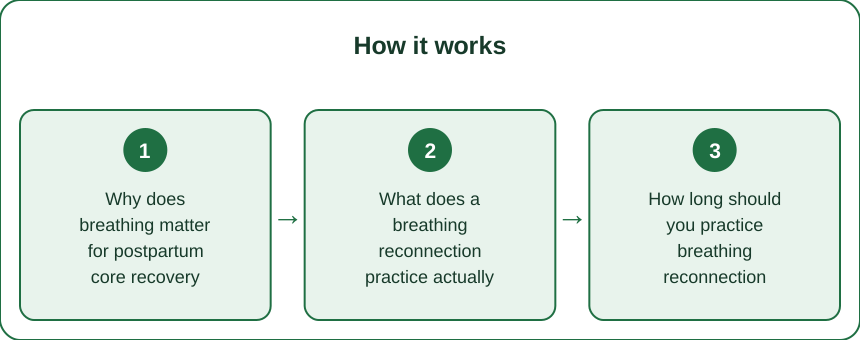
Why does breathing matter for postpartum core recovery specifically?
Because the diaphragm and pelvic floor move together as a functional unit — when you inhale, both should gently descend; on exhale, both should gently lift. Pregnancy and delivery can disrupt this coordination regardless of delivery type.
If that coordination is off, adding core exercises on top of it can mean you’re generating downward pressure on a pelvic floor that isn’t ready to manage it, even in exercises that look ‘gentle.‘
What does a breathing reconnection practice actually look like?
Lying on your back, knees bent, one hand on your belly and one on your ribs: inhale slowly through the nose, feeling ribs expand sideways and belly soften — this is the descent phase.
On the exhale, gently draw the belly button toward the spine while imagining a light lift through the pelvic floor, like drawing up rather than bearing down. Start with 5-10 slow breaths, once or twice a day.
How long should you practice breathing reconnection before adding core exercises?
There’s no universal number of days, but many postpartum fitness specialists suggest practicing until the coordination feels automatic, not forced — for some that’s a couple weeks, for others longer, especially after a C-section or a pregnancy with significant separation.
A pelvic floor physical therapist can assess this directly rather than guessing from symptoms alone, which is the more precise option where accessible.

Myth vs Fact: Postpartum Breathing and Core Work
Myth: Breathing exercises are too gentle to matter — you need real core work. Fact: Breathing coordination is the foundation the ‘real’ core work depends on; skipping it can make later exercises less effective or even counterproductive.
Myth: If you’re not doing crunches, you’re not working your core. Fact: The deep core includes the diaphragm, deep abdominals, back muscles, and pelvic floor working together — none of which requires a crunch to train.
Myth: Breathing reconnection is only for people with diastasis recti. Fact: It’s broadly useful after any pregnancy, since the whole system adapts during those months regardless of whether visible separation occurred.
What signals mean it’s time to progress beyond breathing work?
Being able to coordinate the exhale-lift consistently without conscious effort, no leaking or heaviness during the practice, and — ideally — clearance or guidance from a provider or pelvic floor specialist familiar with your specific delivery and recovery.
Progress gradually from there: gentle pelvic tilts and bridges before anything resembling a traditional crunch or plank.
FAQ: Postpartum Breathing Reconnection Questions, Answered
How soon after birth can breathing reconnection exercises start?
Gentle diaphragmatic breathing is often considered appropriate very early postpartum for most uncomplicated deliveries, but always confirm with your own provider given your specific delivery details.
Does breathing reconnection help with diastasis recti specifically?
It’s often recommended as a foundational piece of diastasis recovery programs, though it’s typically combined with additional targeted exercises rather than used alone.
Is it normal to feel nothing when trying this at first?
Yes — many people report the coordination feels disconnected or hard to sense initially; this generally improves with consistent practice over 1-2 weeks rather than happening instantly.
TL;DR:
- Diaphragm and pelvic floor move together on breath — pregnancy can disrupt that coordination
- Practice: inhale to soften and expand, exhale to gently draw in and lift, 5-10 breaths daily
- Progress to core exercises once the coordination feels automatic, not forced
- A pelvic floor PT can assess readiness directly rather than guessing from symptoms
The breath is the part most programs skip — and often the part that determines whether the rest of the plan actually works. This is general information, not medical advice.
See It in Motion
Seen here: Maternity Capris with Side Pockets — shop it on bubblelime.com
Keep Reading
This article is for general informational and styling purposes only. Fit, sizing, and product availability may vary.