Rebuilding Your Core After Birth: The Full Progression, Week by Week

Quick Answer: Postpartum core rebuilding works in stages, and the stages are gated by capability rather than by weeks on a calendar. Start with breath and pressure management, progress to gentle connection work, then to anti-movement holds, then to loaded and dynamic work. The single most useful checkpoint at every stage is whether you can maintain a normal breath without doming, bulging, or leaking. If you cannot, that is the stage you are still in - and there is no penalty for staying there.
Most postpartum core advice is either far too cautious to be useful or a set of exercises with no criteria for when to progress. What follows is a progression with checkpoints. Get clearance from your provider before starting, and if you have persistent pain, leaking, or a feeling of heaviness in the pelvis, see a pelvic floor physiotherapist - this is general information, not medical advice.

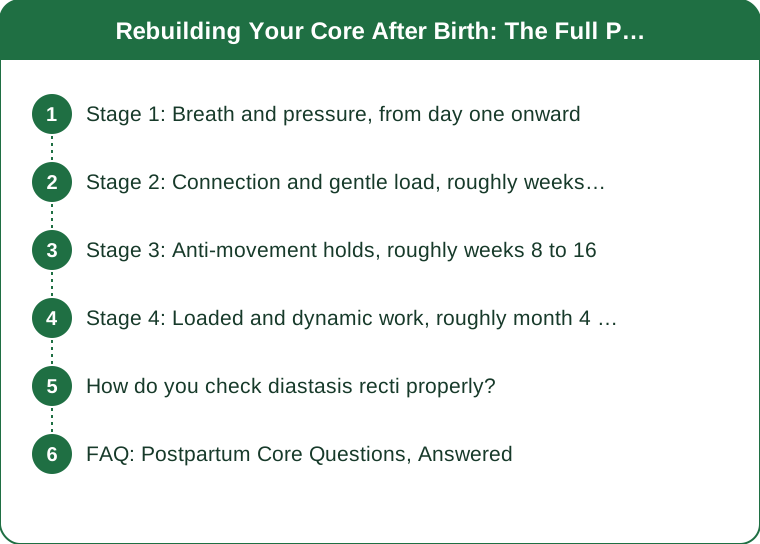
Stage 1: Breath and pressure, from day one onward
What you are actually working on: Not strength. You are re-establishing the coordination between the diaphragm, the deep abdominals, and the pelvic floor - a system that worked automatically before pregnancy and has spent months being reorganized by a growing uterus.
Why this comes first and cannot be skipped: Every core exercise you will do later manages intra-abdominal pressure. If that management is not restored, more advanced work simply pushes pressure outward and downward into the exact tissues that are healing. This is the mechanism behind doming, and behind a great deal of postpartum leaking.
The core practice - 360 breathing. Lie on your back with knees bent, hands on the lower ribs. Inhale and let the ribcage expand sideways and backward, not just the belly upward. Exhale slowly and feel the ribs draw down and in and a very gentle lift through the pelvic floor. That gentle lift is the connection you are rebuilding. Two sets of ten, once or twice a day.
Add the exhale-on-effort habit immediately. Every time you lift the baby, stand from a chair, or move the car seat, exhale as you exert. This one habit does more for early recovery than any exercise, because it applies to the hundred lifts a day you are already doing.
Positioning matters more than you would expect. Side-lying and supported sitting reduce the pressure demand while you rebuild the pattern. If lying flat feels like too much, it is - use a wedge of pillows behind the shoulders.
After a cesarean, the same work applies with one addition. Once the incision has healed and your provider has cleared you, gentle scar mobilization - moving the skin around the scar in small circles - helps restore the tissue glide that the abdominal wall needs to work as a unit. Start light, and stop if it is painful.
Checkpoint to move on: You can do ten slow breaths with visible lateral rib expansion and feel a gentle pelvic floor response on the exhale, without holding your breath or bracing. For most people this takes one to three weeks of practice. There is no advantage to rushing it.
Stage 2: Connection and gentle load, roughly weeks 2 to 8
What you are working on: Adding small amounts of limb movement while keeping the breath and pressure pattern from Stage 1 intact. The abdominal wall learns to stay engaged while something else moves.
Heel slides. On your back, knees bent, exhale and slowly slide one heel away along the floor until the leg is nearly straight, then return. The lower back should not arch and the belly should not dome. Eight to ten each side, slowly.
Toe taps. Both knees bent at 90 degrees in tabletop, exhale and lower one foot to tap the floor, return. If the abdomen bulges or the back lifts off, reduce the range - tap toward the floor rather than to it.
Dead bug, modified. Same tabletop position, extend one arm overhead while the opposite leg reaches out only as far as control allows. This is the first exercise where most people discover their actual current limit, and the correct response is to shorten the reach, not to push through.
Glute bridges. Often overlooked in core work, but the glutes and the deep core work as a system, and glute weakness is extremely common postpartum after months of altered pelvic position. Ten to twelve, exhaling as you lift.
Side-lying clamshells and standing hip work. These build the lateral hip stability that the pelvis needs, and they are comfortable in the early months when floor time is limited.
How to run the stage: Three to four short sessions a week, ten to fifteen minutes. Consistency matters far more than duration, and fifteen minutes while the baby naps is genuinely enough at this stage.
Checkpoint to move on: You can complete a full set of modified dead bugs with normal breathing and no doming, bulging, leaking, or feeling of downward pressure. If any of those appear, stay here. This is not a delay - it is the training.
Stage 3: Anti-movement holds, roughly weeks 8 to 16
What you are working on: The core’s real job, which is resisting movement rather than producing it. Everything in this stage asks the trunk to stay still while limbs or gravity try to move it.
Modified plank progression. Start with an incline plank, hands on a counter or the back of a sofa. Hold 20 to 30 seconds with normal breathing. Progress by lowering the surface - counter, then chair, then floor from the knees, then a full plank - and only when the previous level is easy and breath stays normal.
Bird dog. On hands and knees, extend the opposite arm and leg while keeping the pelvis level. Place a light object on the low back as a feedback tool; if it slides, you are rotating. Eight each side, holding two to three seconds.
Pallof press. With a resistance band anchored at chest height to your side, press the band straight out and resist the rotational pull. This is one of the highest-value postpartum core exercises and it is almost never mentioned - it trains anti-rotation with no spinal flexion and no pressure spike.
Side plank from the knees. Builds the lateral chain, which supports the pelvis directly. Fifteen to twenty seconds each side, progressing to full side plank later.
Suitcase carry. Walk 30 to 40 seconds holding a single weight at one side, staying upright and level. This is functionally identical to carrying a car seat, which is exactly why it belongs here.
What to watch throughout: A visible ridge or valley along the midline during effort means the load is too high. Any leaking or heaviness means the same thing. Regress the exercise rather than pushing on - the tissue responds well to appropriate load and poorly to excessive load, and there is no benefit to finding out which one you are applying the hard way.
Checkpoint to move on: A 30-second incline plank and eight controlled bird dogs each side with normal breathing, no doming, and no symptoms. Many people take longer than 16 weeks to arrive here and that is entirely normal, especially with a cesarean recovery or a second or third baby.

Stage 4: Loaded and dynamic work, roughly month 4 onward
What you are working on: Returning to real training - carrying, lifting, and eventually impact - with the pressure system working underneath it.
Loaded carries first. Farmer’s carries and suitcase carries with progressively heavier weight are the single best bridge back to normal life, because normal life is mostly carrying things asymmetrically while tired.
Squats and hinges with load. Goblet squats and Romanian deadlifts with light dumbbells, exhaling on effort. These are core exercises even though nobody calls them that - the trunk is resisting load throughout.
Push-ups and rows. An incline push-up is a moving plank. Rows rebuild the upper back that months of feeding posture have lengthened and weakened, and upper back strength changes how the whole trunk stacks.
Then, and only then, flexion work. Crunches and sit-ups are not forbidden - they are simply the last thing to reintroduce, not the first, because they are the highest pressure demand and the least functional. If you want them, they belong here, after the anti-movement base exists.
Impact returns last of all. Running, jumping, and plyometrics place the highest demand on the pelvic floor of anything on this list. The common guidance is around 12 weeks at the earliest with no symptoms, and many people benefit from a pelvic floor physiotherapy assessment before returning. Leaking during running is common but not something you have to accept - it is treatable.
Expect it to be non-linear. Sleep, feeding, illness, and hormonal changes all affect capacity week to week. A session that felt easy in month five can feel hard in month six after a bad week of sleep, and that is normal rather than a setback.
And the timeline is genuinely long. Connective tissue remodeling continues for a year or more after birth. Six months to feel like yourself is common; twelve is not unusual, and the people who do best are generally the ones who stopped comparing their timeline to somebody else’s.
How do you check diastasis recti properly?
The self-check. Lie on your back, knees bent. Place your fingers horizontally just above the navel. Lift your head and shoulders slightly - just enough to feel the abdominal muscles engage. Feel for the gap between the muscle edges and, importantly, for how much tension the tissue between them holds.
Depth matters more than width. A two-finger gap with firm, springy tissue is functionally better than a one-finger gap that your fingers sink straight through. The current understanding emphasizes the ability to generate tension across the midline over the raw measurement, which is a significant shift from the older advice.
Check three points. Just above the navel, at the navel, and a few inches below. Separation is often uneven, and knowing where yours is tells you which exercises tend to provoke doming.
Some separation is universal and expected. Essentially everyone has abdominal separation at the end of pregnancy. Most narrows substantially in the first eight weeks without any intervention. Re-checking every two or three weeks is enough; checking daily tells you nothing but anxiety.
When to get professional help. A gap wider than two to three finger-widths that has not improved by around eight weeks, persistent doming during normal daily activity, any leaking, a feeling of heaviness or dragging in the pelvis, or pain - all of these warrant a pelvic floor physiotherapist. In many countries this assessment is routine postpartum care, and it is worth seeking out even where it is not.
And avoid the two things that reliably make it worse. Repeated crunching before the tension-generating capacity exists, and holding the breath during exertion. Both spike intra-abdominal pressure exactly where you do not want it.
This is general information, not medical advice. Get clearance from your provider before beginning any postpartum exercise programme, and see a pelvic floor physiotherapist for individual assessment.
FAQ: Postpartum Core Questions, Answered
When can I start core exercises after giving birth?
Breath and gentle pressure management work can generally begin within days for an uncomplicated vaginal birth, and after a cesarean once your provider has cleared you. Progressive loading typically begins after the six-week check, but the honest gate is capability - normal breathing with no doming, bulging, or leaking - rather than a date.
How do I know if I have diastasis recti?
Lie on your back with knees bent, lift your head slightly, and feel just above the navel for a gap between the muscle edges. Assess how much tension the tissue holds as well as the width - firm tissue with a two-finger gap is functionally better than a narrow gap your fingers sink into.
Are crunches bad after pregnancy?
Not permanently bad, but they belong last rather than first. They create the highest intra-abdominal pressure demand of common core exercises, so reintroduce them after anti-movement work such as planks, bird dogs, and Pallof presses is comfortable without doming.
When can I run again after having a baby?
Common guidance is around 12 weeks at the earliest, and only when you can manage loaded and dynamic work without leaking, heaviness, or pain. A pelvic floor physiotherapy assessment before returning to impact is strongly worth doing - leaking during running is common but treatable, not something to accept.
TL;DR:
- Progress by capability, not by calendar: breath and pressure, then connection, then anti-movement holds, then load and impact.
- The universal checkpoint at every stage is normal breathing with no doming, bulging, leaking, or heaviness.
- Exhale on effort during every daily lift - this habit does more early work than any exercise programme.
- For diastasis recti, tissue tension matters more than gap width, and re-check every two to three weeks rather than daily.
- Crunches and impact come last; Pallof presses, carries, and bird dogs come first and are far more useful.
- See a pelvic floor physiotherapist for persistent doming, leaking, heaviness, or pain, and get provider clearance before starting.
The timeline is longer than anyone tells you and that is normal. Connective tissue remodels for a year or more, and the people who recover best are usually the ones who stopped racing a calendar.
See It in Motion
Seen here: Maternity Capris with Side Pockets — shop it on bubblelime.com
Keep Reading
This article is for general informational and styling purposes only. Fit, sizing, and product availability may vary.